Platy Care Guide: The Fish That Loves to Nibble on Live Plants
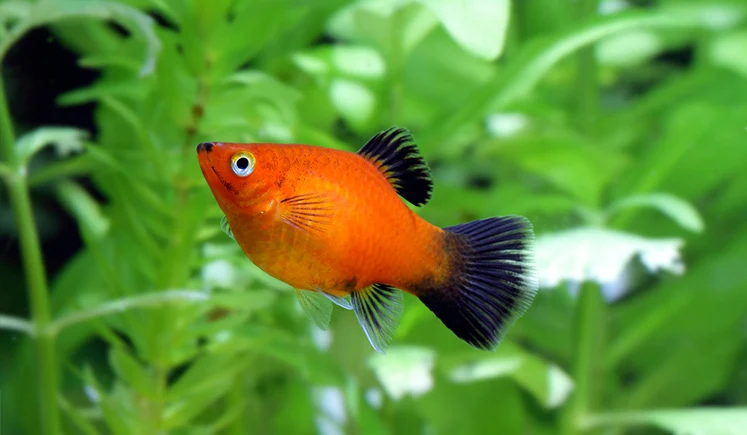
Platy is one of those fish that rarely gets the recognition it deserves. It lives in the shadow of Guppies, Bettas, and the more showy Tetras, but anyone who has kept a school of Platies in a planted tank knows that this species offers a combination that’s hard to beat: intense color, remarkable hardiness, a peaceful temperament, and a fascinating behavior of constantly grazing on the plants, which brings the tank to life throughout the day.
The Origin of Platy
Platy, scientifically known as Xiphophorus Maculatus, is native to Central America, particularly Mexico and Guatemala, where it lives in slow-moving streams, ponds, and ditches with dense vegetation. This plant-filled habitat is key to understanding the behavior that makes this species so interesting in captivity, which we will explore further later in this guide.
Like Guppy, Platy is viviparous, which means that the females give birth to fully formed young instead of laying eggs. The varieties available today are the result of decades of selective breeding and range from classic orange to deep red, including patterns such as Mickey Mouse, Wagtail, and Tuxedo.
Tank Size
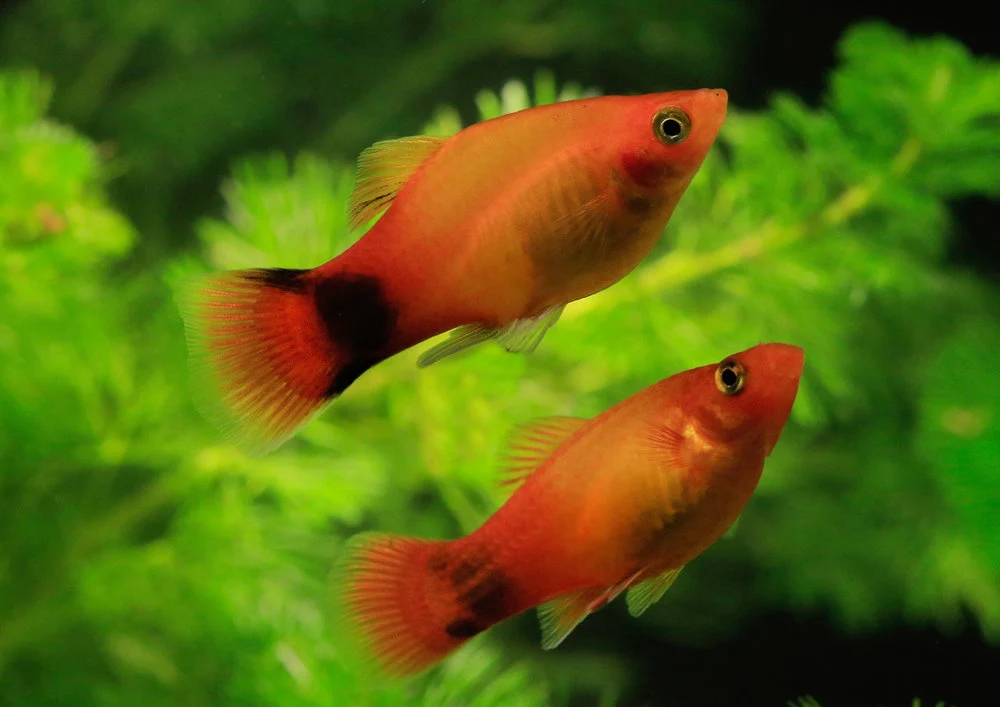
Platy is small but active and sociable, and enjoys living in groups. The minimum reasonable size for a small school is 40 liters, although 60 liters or more provides much greater comfort, both in terms of swimming space and water stability.
It’s also worth factoring in breeding when planning your tank. Like the guppy, platies breed easily when males and females are kept together, so starting with a tank that has some extra space will help you avoid making hasty decisions a few months down the road.
Water Parameters
Platy is a remarkably hardy fish, making it an excellent choice for those who are still fine-tuning their care routine. It prefers temperatures between 20 and 26 degrees, a wider and cooler range than most tropical fish, and tolerates pH levels between 7.0 and 8.2 well, showing a preference for slightly alkaline water with some hardness.
This detail about water hardness is interesting and rarely discussed: unlike many Amazonian fish, which prefer soft, acidic water, Platy thrives in harder water, making it ideal for people who live in areas where tap water naturally contains more minerals.
Diet and the Fascination with Plants
Here’s the most interesting part of this guide. Platy is omnivorous, with a much stronger tendency toward a plant-based diet than most community tank fish. In the wild, a large part of its diet consists of plant matter and microorganisms that grow on submerged surfaces, and this instinct remains intact in captivity.
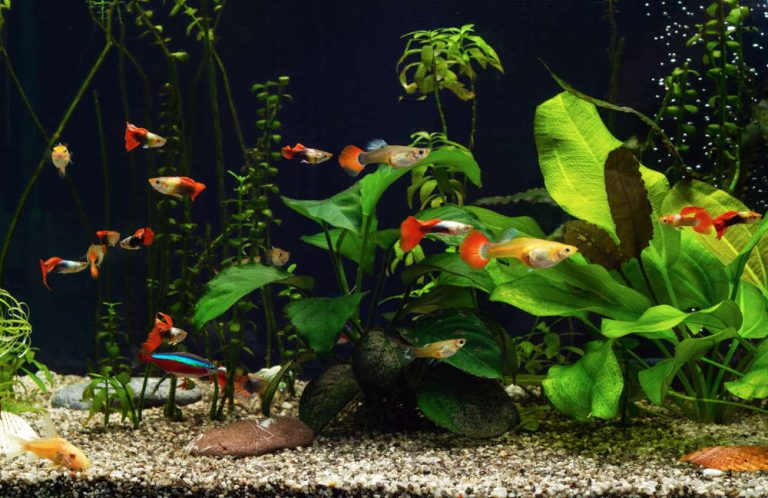
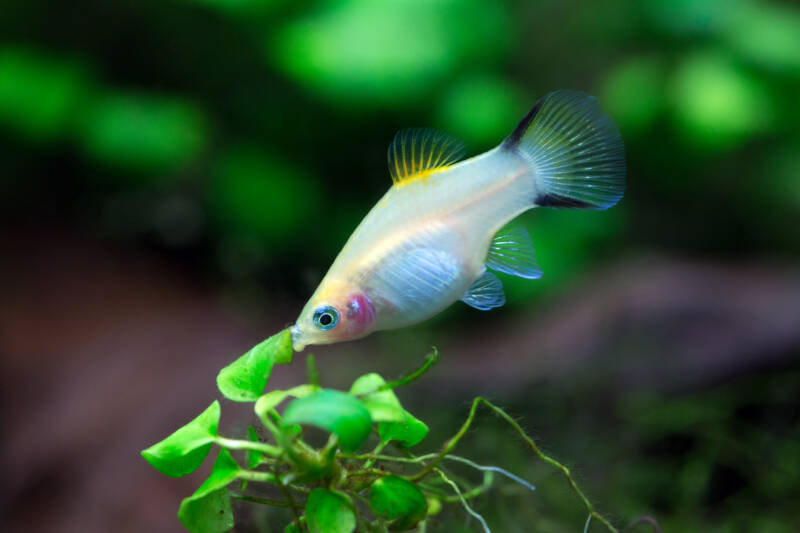
If you watch a Platy in a planted tank, you’ll notice that it spends much of the day nibbling on leaves, wood and rocks, in a rapid, repetitive motion that seems almost obsessive. What it’s doing isn’t eating the plants, Platy it’s literally scraping off the biofilm and microalgae that form on those surfaces. Biofilm is a thin layer, almost invisible to the naked eye, composed of bacteria, microalgae, and other microorganisms, and it is a natural and valuable source of food.
This behavior offers an excellent practical advantage: Platies help keep plant leaves cleaner by reducing the buildup of microalgae without damaging the plant itself. Platies mouths are not designed to tear healthy plant tissue, so the leaves remain clean rather than pitted, unlike what happens with truly herbivorous and destructive species.
It’s worth noting that this grazing behavior does not replace a proper diet. In captivity, a diet consisting of high-quality flake food for tropical fish, supplemented with plant-based pellets and blanched vegetables such as zucchini or spinach, keeps platies healthy and their colors vibrant.
Temperament and Community Life
Platy is peaceful by nature and rarely causes problems in a community tank. It shows no interest in biting other fish’s fins, which makes it safe to keep with long-finned species, and it gets along well with virtually any fish of a similar temperament and compatible size.
The only tension that usually arises is among males, especially in tanks with few females, where competition for mating can lead to constant chasing. The recommended ratio is two to three females for every male, which spreads their attention and keeps the group peaceful.
Reproduction
Just like Guppies, Platy reproduces without any intervention on your part. A female can give birth to between twenty and eighty fry at a time, and she can store sperm to produce several broods over the course of several months, even without any males present during that time.
The fry are born ready to swim and feed, and their survival depends heavily on the availability of hiding places, since adults often eat fry. Dense vegetation and aquatic moss significantly increase the survival rate, and their absence acts as a natural population control for those who do not want an overcrowded tank.
Common Mistakes to Avoid
Assuming that the fish are nibbling on plants means they are starving. This is natural and constant behavior, not a sign of insufficient feeding.
Keeping too many males for too few females. This causes constant stress in the females and conflicts among the males.
Water that is too soft and acidic. Unlike many tropical species, the platy prefers water with some hardness and suffers in the long term under very acidic conditions.
Ignoring reproduction when planning the tank. Without a plan, the population multiplies rapidly, and water quality deteriorates as a result.
Frequently Asked Questions
Do platies eat my plants?
Not in a destructive way. They scrape biofilm and microalgae off the surface of the leaves, but they don’t tear or consume healthy plant tissue.
How long does a platy live?
Between three and five years under good conditions, which is well above average for fish of this size.
Can I keep only males?
Yes, you can, and it’s a valid option for preventing breeding, as long as the tank has enough space and hiding spots to reduce hierarchy conflicts among them.
In short, Platy is a fish that gives a lot and asks for little. It adds color, constant activity, and a grazing behavior that helps keep the plants clean. All with a hardiness that makes it perfect for those who are still gaining confidence in the hobby.