Top 5 Best Aquarium Tank Mates for Bettas
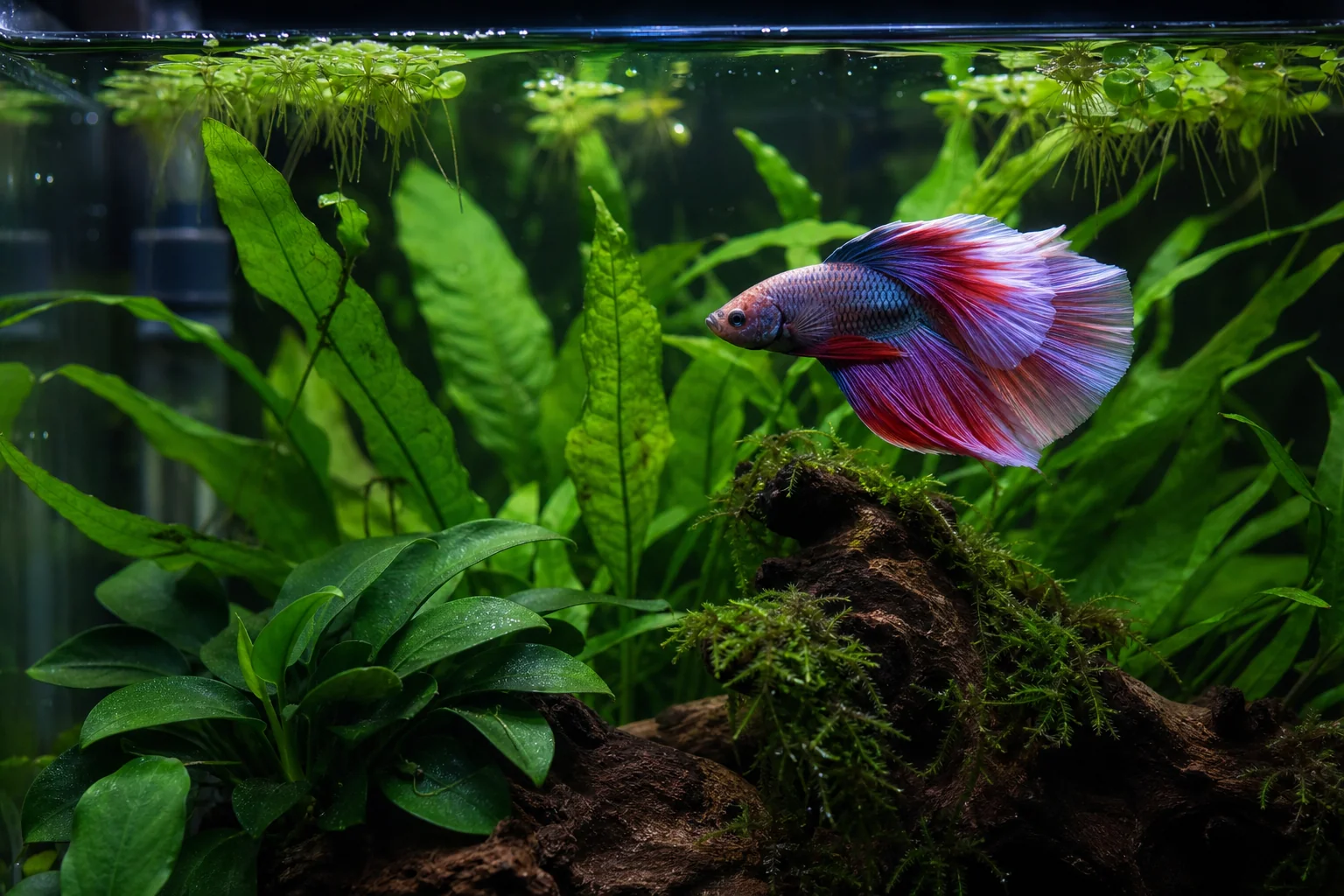
Do you have a betta and are starting to think about getting it a tank mate? It’s a very common question, and the short answer is yes, you can have a community tank with a betta, as long as you choose the right tank mates. The long answer involves understanding the personality of this territorial and somewhat wary fish, and choosing species that won’t challenge its territory or appear, in its eyes, to be another betta invading its home. Here are five active, visible fish that usually make good tank mates. They won’t hide all day or get lost among the betta’s colors.
The Obvious Warning
Never put two male bettas in the same tank. This isn’t even a matter of compatibility, it’s a surefire recipe for serious conflict, often fatal for one of them. Groups of female bettas are possible under certain conditions, but they require a much larger tank, plenty of decorations to block lines of sight, and close monitoring. Therefore, they fall somewhat outside the scope of this article, which focuses on tankmates from other species.
It’s also worth remembering that every betta has its own personality. Some are extremely tolerant of tank mates, while others are more territorial, even beyond what would be expected for the species. The suggestions below are generally the safest bets, but you should always introduce them carefully and have a Plan B in case your particular betta doesn’t take well to the company. Generally, it would actually be better to start a tank with these fish and only then add the betta, because that way it would be placed in an already established ecosystem. So it tends to be calmer around the other fish.
1. Albino Corydoras
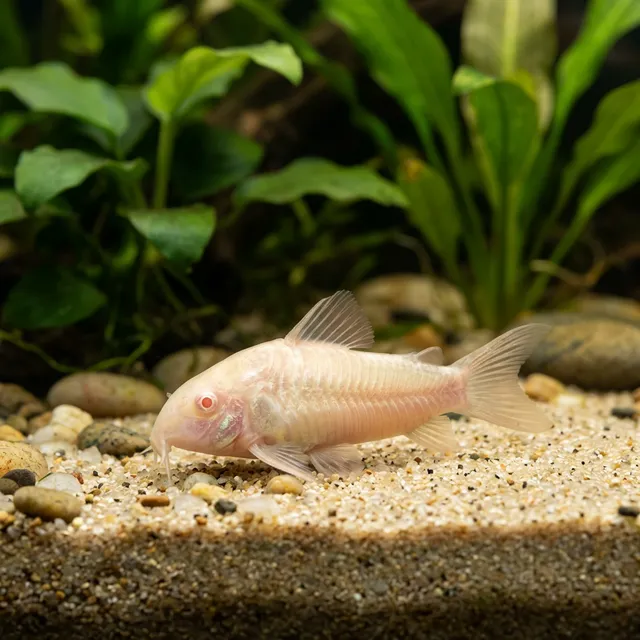
Albino Corydoras are perhaps the most classic and most recommended choice for anyone looking for a tank mate for their betta. They live at the bottom of the aquarium, are extremely peaceful, and have neither long fins nor colors that could be mistaken for another betta, which greatly reduces the risk of territorial conflict. Unlike other, more discreet bottom-dwelling fish, corydoras are constantly active, exploring the substrate in groups, which makes them very visible and fun to watch, without ever encroaching on the betta’s space in the middle and upper zones.
They need to live in groups of at least six individuals of the same species, since they show visible signs of stress when kept alone. Think of a tank large enough to comfortably accommodate both the betta and a school of corydoras. So, something around 60 liters is usually a good starting point for this combination.
2. Harlequin Rasbora
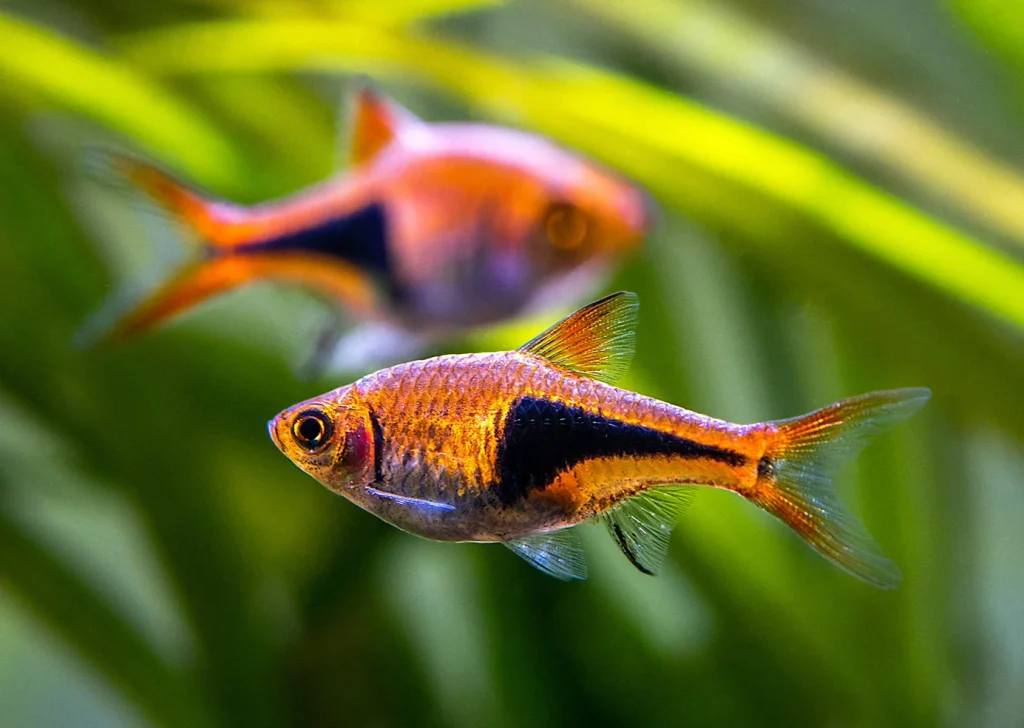
The harlequin rasbora is a small but very noticeable schooling fish, with a silvery body and a triangular black spot on its back that makes it easy to recognize and a pleasure to watch in motion. It swims in groups in the middle zone of the tank, displaying active and constant behavior, never hiding for long periods, which makes it a strong visual presence in the tank without directly competing with the betta’s colors.
It thrives best in groups of six or more, and a 50-liter tank provides enough space for both the school and the betta to swim around without much overlap. It is a hardy and tolerant species, which also helps it cope better with the occasional stress of sharing a tank with a territorial neighbor.
3. Endler’s Livebearer
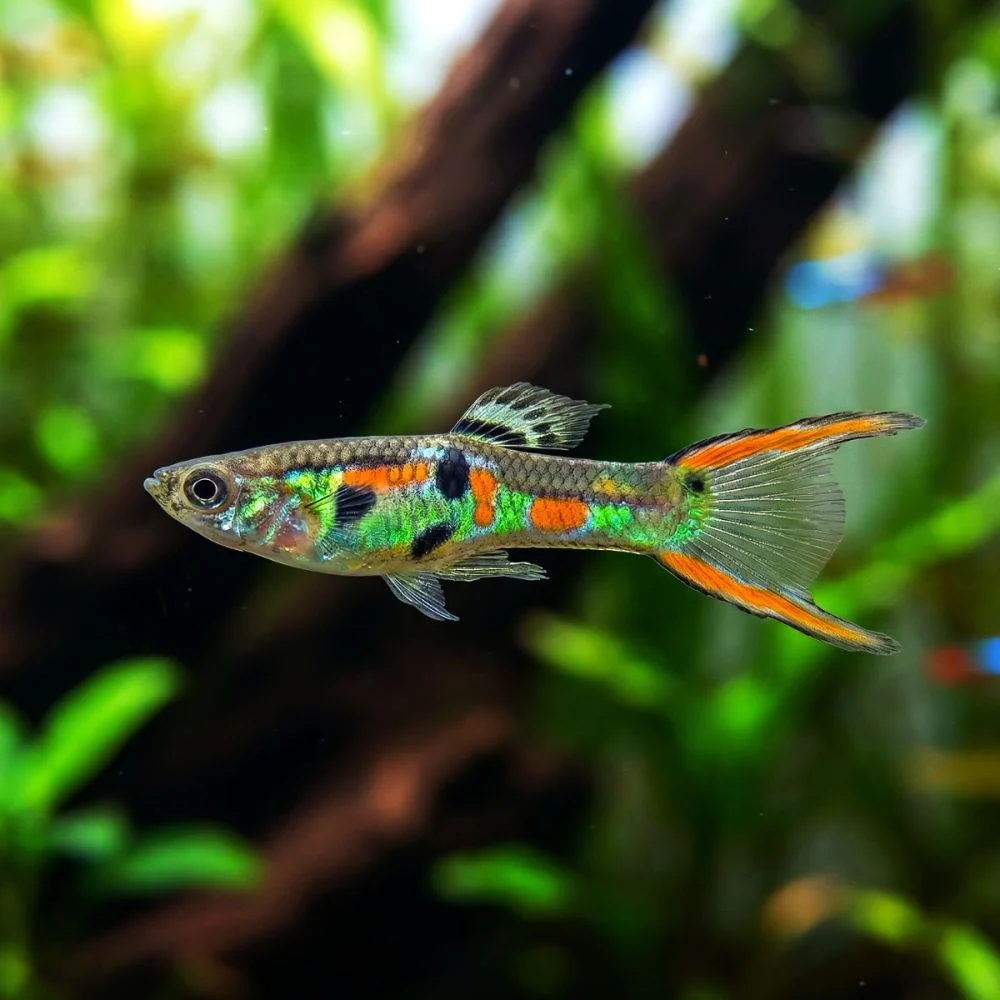
The Endler’s Livebearer is a close relative of the guppy, but with a metallic sheen and color patterns that give it its own distinct identity, especially in males, which display shades of orange, green, and blue on a small but lively body. It is an extremely active fish, constantly swimming in the upper and middle zones of the tank, which provides plenty of visual activity without ever encroaching on the space that the betta usually claims as its own.
Unlike species with long fins, Endler’s bettas have short fins and a compact body, which greatly reduces the chance that a betta will mistake them for a rival. They thrive best in small groups, ideally with more females than males, and a 40-60 liter tank is enough for a balanced mix with a betta. They breed easily, so you can expect occasional fry if you keep males and females together.
4. White Cloud Mountain Minnow
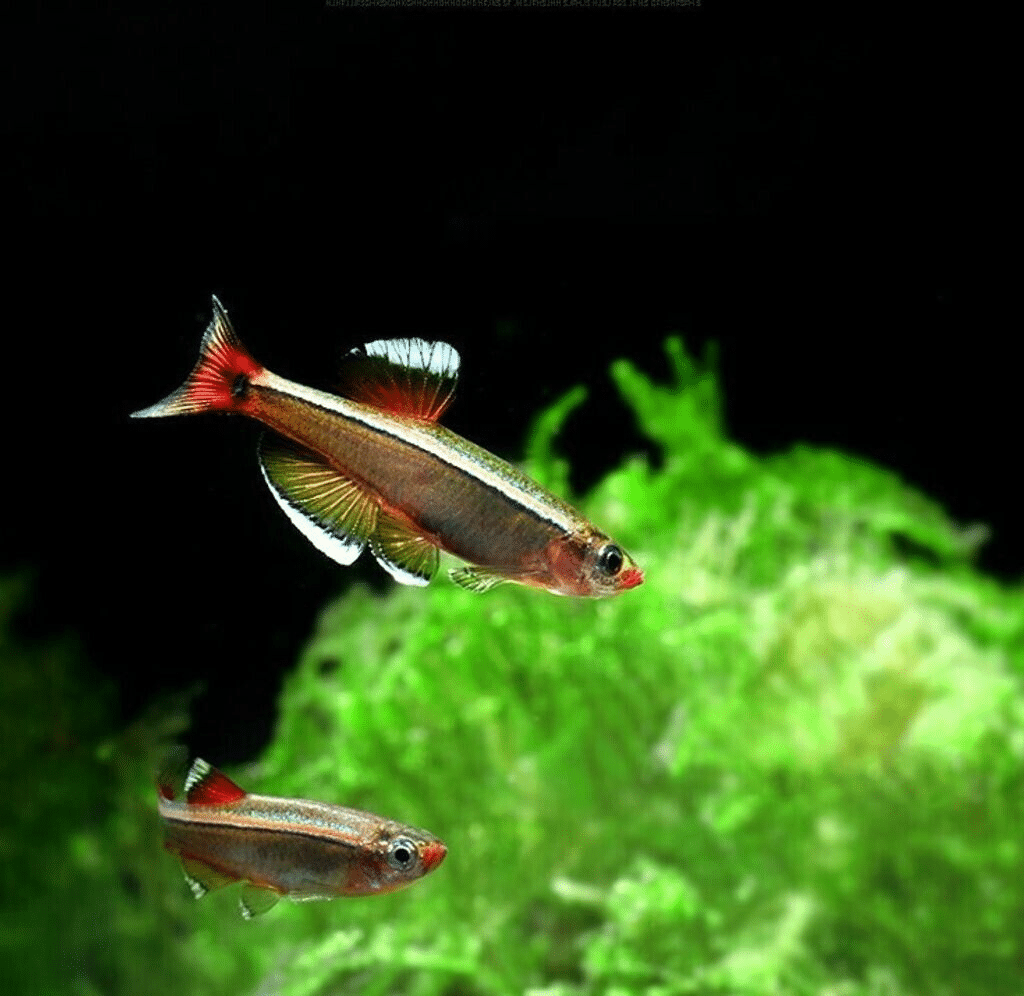
White Cloud Mountain Minnow is a hardy, active, and low-maintenance fish with a silvery body and hints of red and gold on its fins that stand out beautifully under the tank lighting. It swims in schools through the middle and upper zones at a steady, visible pace, without taking long breaks to hide behind the decor, making it easy to spot with the naked eye.
One of its major advantages is its tolerance for cooler water than most tropical fish, which makes it a flexible choice for those who don’t want to rely solely on a powerful heater. It thrives best in groups of six or more fish, in a tank of 60 liters or more, at a temperature between 18 and 24 degrees, which still comfortably overlaps with the temperature range preferred by bettas.
5. Dwarf Neon Rainbowfish
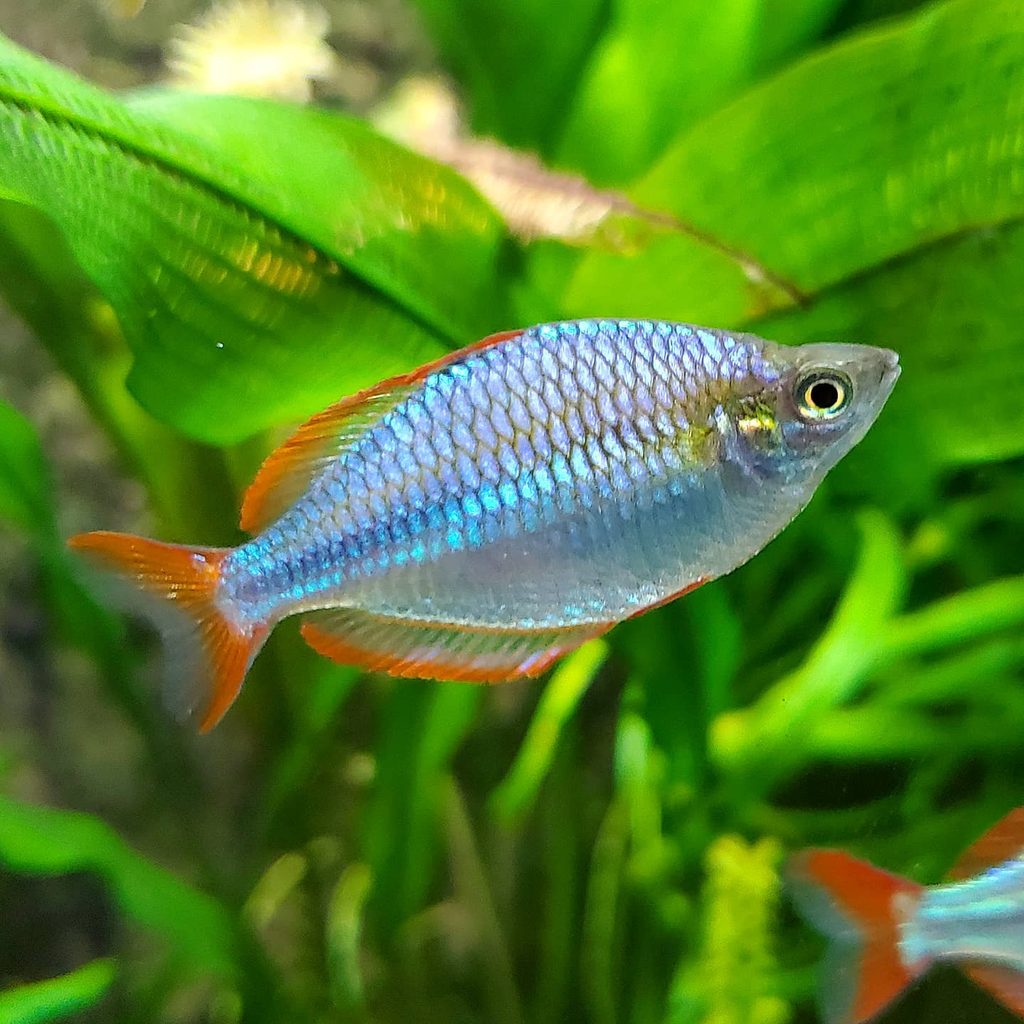
Rounding out the list is the Dwarf Neon Rainbowfish, also known as the Praecox, a small fish with a striking visual presence thanks to the metallic blue sheen that runs along its body, especially when well-lit. It is an active and constant schooling fish that swims primarily in the middle section of the tank, adding color and movement without ever mimicking the betta’s showy fin style.
It is a naturally peaceful species, with no tendency to chase or bother other fish, making it a safe choice to keep with a betta that has a more reserved personality. It thrives best in groups of six or more, in a tank of 50 liters or more, at a temperature between 24 and 28 degrees, in line with the betta’s preferences.
Quick Comparison
| Species | Tank Zone | Activity Level | Recommended Minimum Size |
| Albino Corydoras | Bottom | High | 60L+ |
| Harlequin Rasbora | Middle | High | 50L+ |
| Endler’s Livebearer | Middle and Upper | Very High | 40-60L+ |
| White Cloud Mountain Minnow | Middle and Upper | High | 60L+ |
| Dwarf Neon Rainbowfish | Middle | High | 50L+ |
| Betta | Middle and Upper | Moderate | 20L (40L+ ideal) |
Frequently Asked Questions
Can I keep several of these species together with my betta at the same time?
Yes, as long as the tank is large enough for all of them and you introduce the species one at a time, giving your betta time to get used to each new tankmate before adding the next one.
Won’t such active fish stress out my betta?
In most cases, no, since these species have no interest in confronting the betta and don’t even resemble another male of the same species. It’s always worth observing whether your particular betta handles the faster pace of these tankmates well, especially in the first few days after introduction.
What should I do if my betta starts chasing a new tank mate?
Keep a close eye on the situation for the first few days. Occasional chasing without physical contact is usually just curiosity or initial territorial behavior, which tends to subside over time. If there is biting, torn fins, or constant, aggressive chasing, the safest course of action is to separate the two fish and reconsider the pairing.
So, a betta doesn’t need to live alone or surrounded by shy, reclusive fish for you to have a balanced community tank. Corydoras, Harlequin Rasboras, Endler’s Livebearers, White Cloud Mountain Minnows, and Dwarf Rainbowfish bring constant movement and color to the aquarium, without ever encroaching on the betta’s territory or being overshadowed by its beauty.