Top 7 Algae-Eaters for Small Freshwater Tanks
If you’ve lost count of how many times you’ve tried to get rid of algae in your tank, you know all too well that they don’t give up easily. The good news is that nature solved this problem a long time ago, and there are entire species that practically make a living out of cleaning algae for you. The bad news is that not all of them fit comfortably in a small aquarium, and choosing the wrong species can turn an algae problem into a much bigger one. This article focuses specifically on small tanks, around 40 liters, and highlights seven options that thrive beautifully in that space, without requiring a tank really big to live happily.
1. Otocinclus
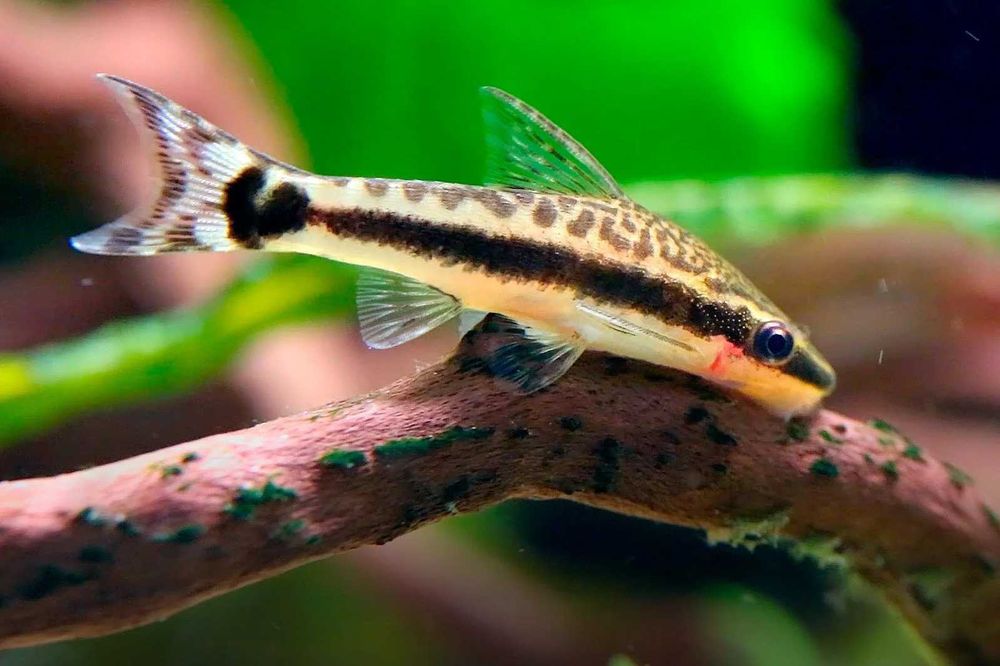
If there’s one name that always shows up on these lists, it’s Otocinclus. This tiny, finger-sized catfish spends much of the day clinging to the glass or plant leaves, scraping off algae with impressive dedication. It’s practically made for small aquariums, is extremely peaceful, and will never bother the other inhabitants of your aquarium.
Many people say that for Otocinclus to live a healthy life, you need to make sure the tank already has some natural algae growing before introducing them, so they’ll have enough food in the first few weeks, but I believe they can live just fine without any major problems, as long as we take proper care with their diet.
It thrives best in groups of four to six fish, in a 40-liter aquarium or larger, at a temperature between 22 and 26 degrees. To supplement their diet, it’s a good idea to offer them seaweed tablets or pieces of blanched zucchini from time to time.
2. Amano Shrimp
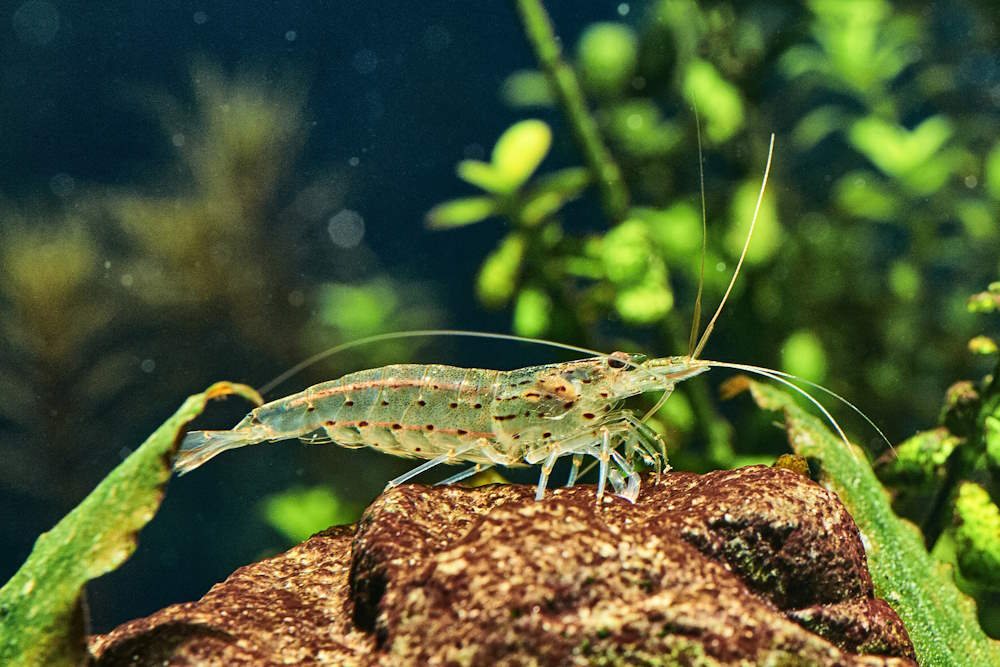
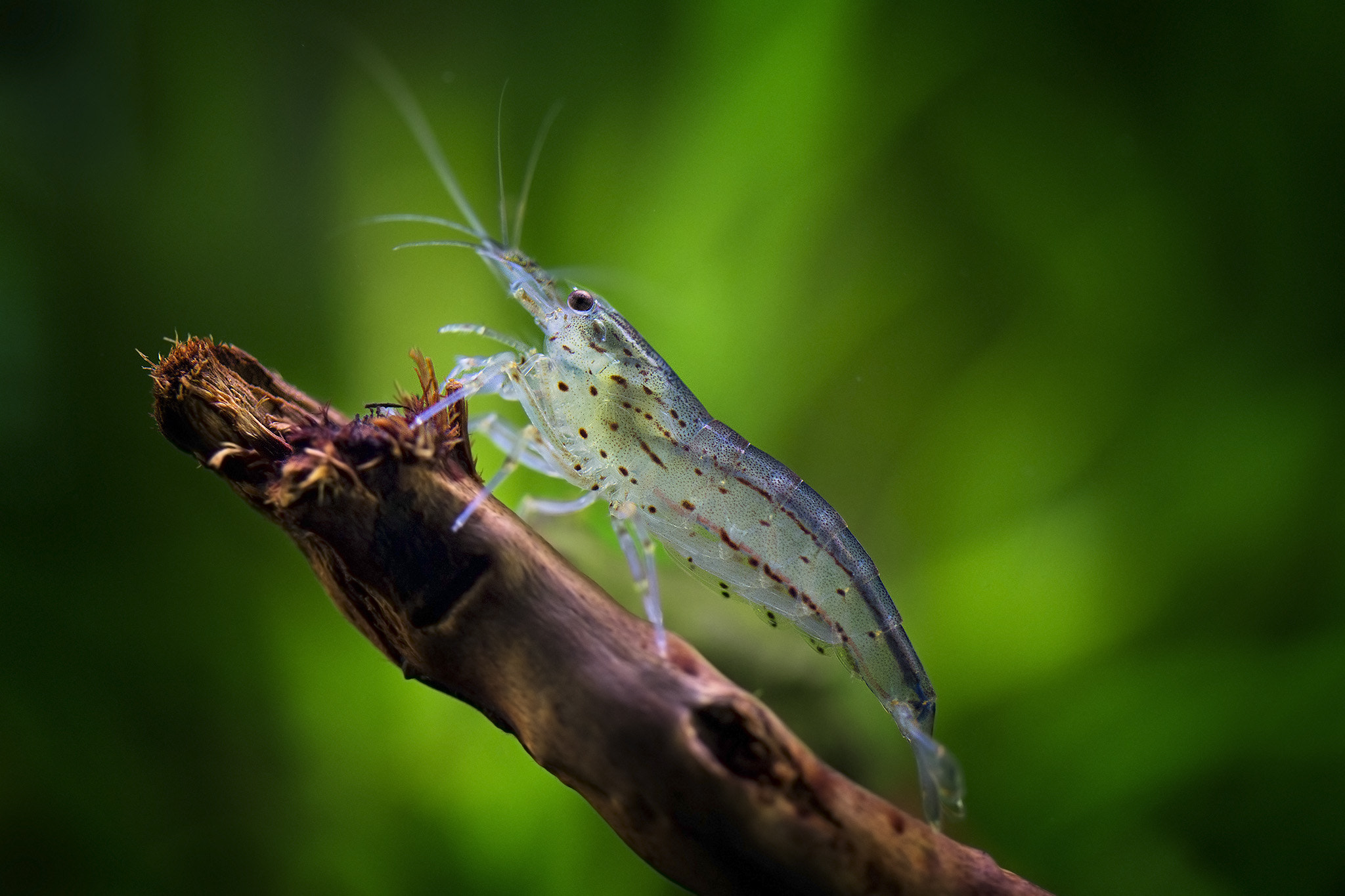
The Amano shrimp is a virtually tireless algae-eating machine, and it’s especially effective against more stubborn types like Black Beard Algae, which many other algae eaters avoid. In addition to being hardworking, it’s unobtrusive and fun to watch, with that characteristic way it moves among plants and decorations in search of food.
It fits perfectly in a small tank, and a group of five to ten shrimp is usually enough to keep a 40-liter tank well-maintained. It prefers stable water, without sudden spikes in ammonia or copper levels, since shrimp are generally sensitive to heavy metals in the water. It’s always a good idea to make sure that any treatment or fertilizer you use in the aquarium is safe for invertebrates before adding it.
3. Cherry Shrimp
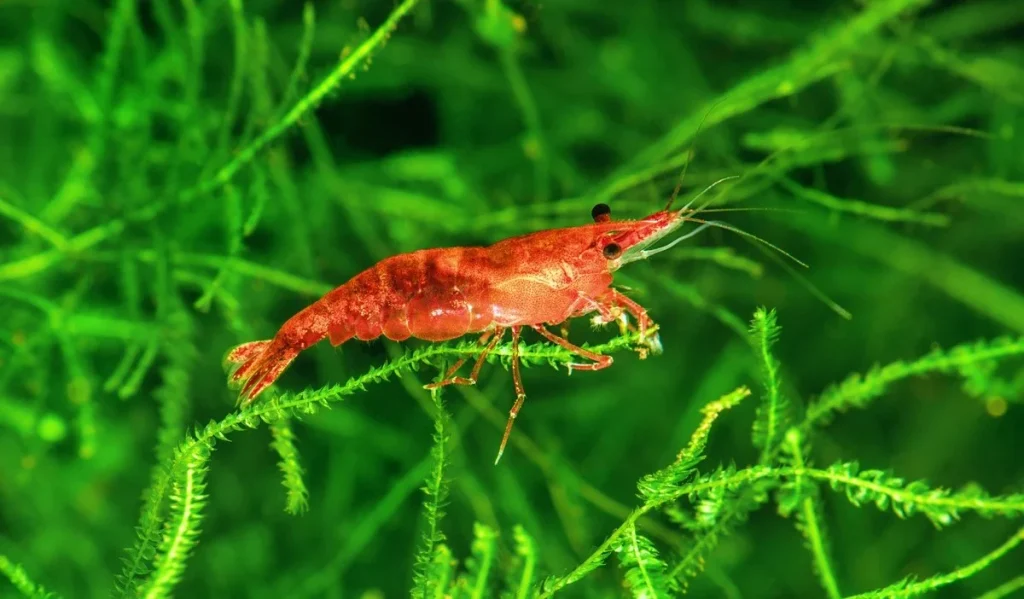
If you’re looking for both color and practicality, Cherry Shrimp effortlessly combines the two. The bright red color that gives it its name stands out beautifully against a dark background or green plants, and at the same time, it spends the day cleaning thin layers of algae from leaves, glass, and decorations. It’s one of the easiest species to breed in captivity, which means you’ll quickly have a small colony working for you without any extra effort on your part.
A 20 to 40 liter tank is enough for a generous group of Cherry Shrimp, with a temperature between 20 and 26 degrees. Like amano shrimp, they are sensitive to copper and sudden changes in water parameters, so a fully cycled and stable aquarium is essential before introducing them.
4. Nerite Snail
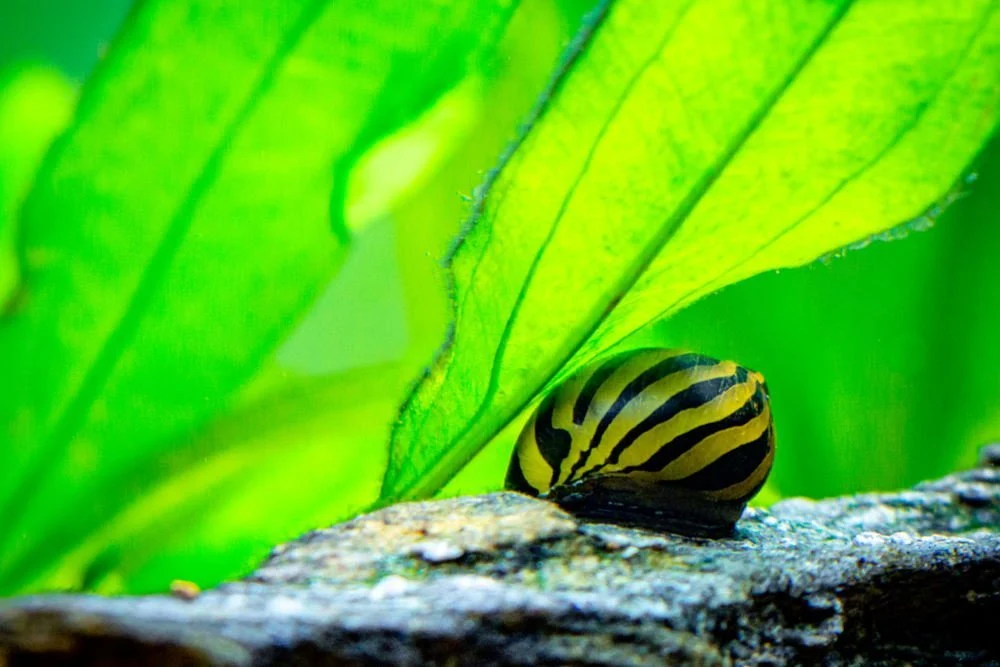
If you’re looking for an algae-eater that won’t reproduce uncontrollably in your tank, the Nerite Snail is the perfect choice. It needs brackish water to reproduce successfully, which means that in a standard freshwater aquarium, the population remains stable. It’s a true algae vacuum, especially effective against the green and brown films that build up on the glass.
The shells come in a wide variety of patterns and colors, which makes them a small visual treat in addition to their practical function. Five Nerite Snails are enough for a 40-liter tank, with a temperature between 22 and 26 degrees. One thing to keep in mind: they sometimes leave small white eggs stuck to the glass and decorations, which do not hatch in freshwater, but which some aquarists prefer to remove for aesthetic reasons.
5. Sewellia Lineolata
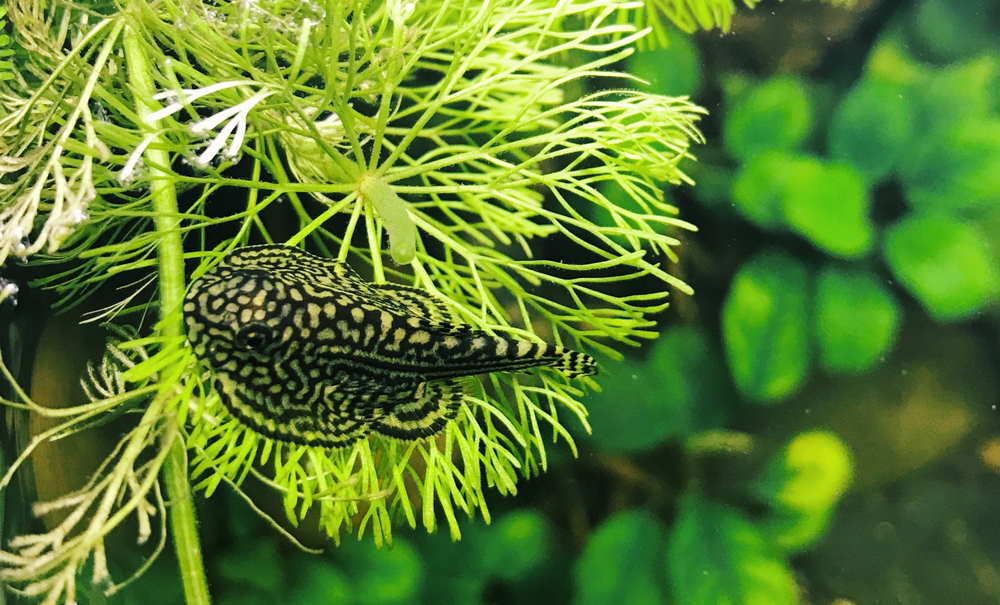
Sewellia lineolata, also known as the reticulated hillstream loach, is quite different from everything else on this list and has a unique appearance that immediately stands out in the tank. This small fish, which clearly resembles something prehistoric, likes to cling to rocks and surfaces using a sort of natural suction cup, gliding slowly as it scrapes away algae and biofilm quite effectively.
Unlike most of the fish on this list, Sewellia prefers well-oxygenated water with a stronger current, which mimics the stream environment where it originates. Therefore, it’s worth ensuring a good water flow in the tank, using a pump or a more powerful filter outlet, and keeping the water parameters consistently stable. It is a peaceful species that does well on its own or in small groups and prefers well-established tanks with some natural algae available. A 50- to 60-liter aquarium or larger is ideal, with a temperature between 20 and 25 degrees, cooler than many common tropical aquariums.
6. Ramshorn Snail
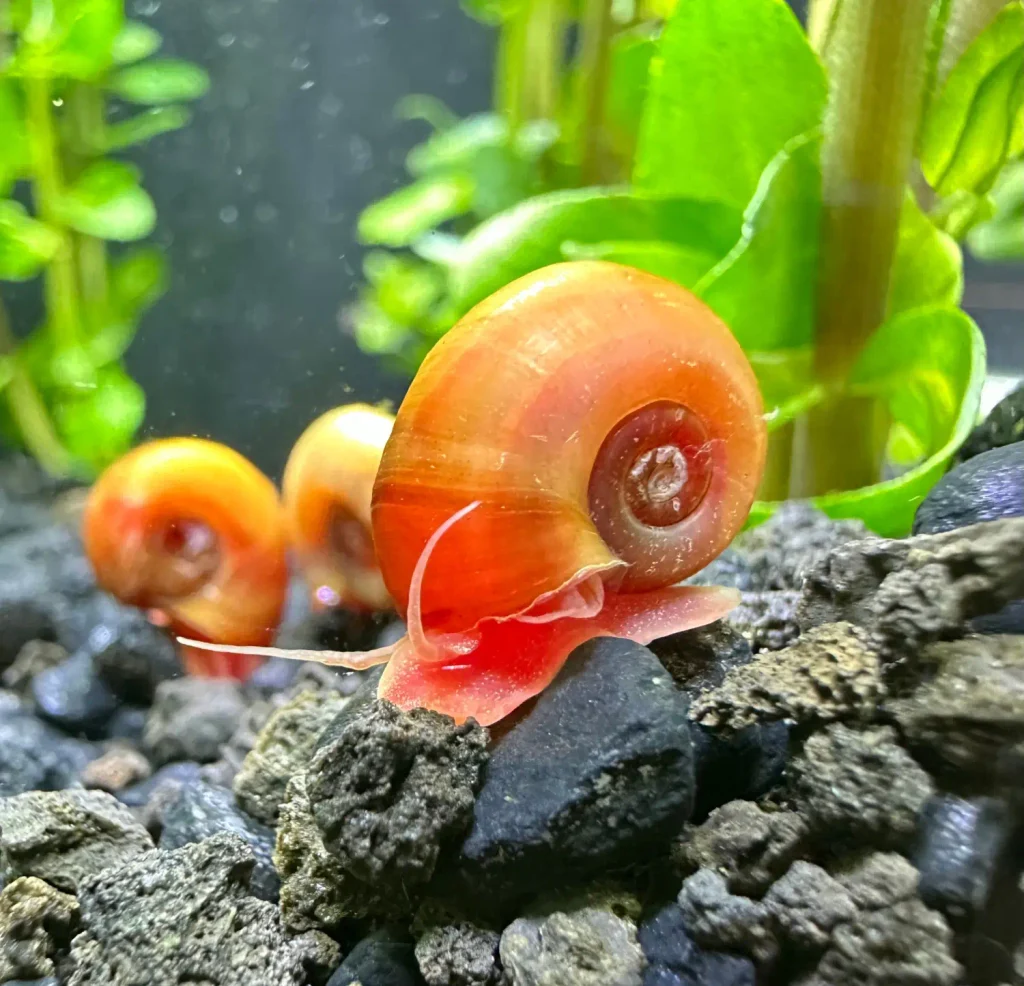
The Ramshorn Snail, with its distinctive spiral shell, is another excellent choice for small aquariums. It eagerly eats soft algae, as well as food scraps and decomposing organic matter, helping to keep the tank cleaner overall. It comes in a variety of colors, from the traditional brown to red and blue, depending on the strain.
A 20-liter aquarium or larger is sufficient for a small population, with a temperature between 18 and 28 degrees. A serious warning is in order with this species: it reproduces with astonishing ease, and if left unchecked, it can multiply to the point of becoming practically a pest in the tank, covering the glass, decorations, and plants in no time. Still, they are beautiful snails with plenty of character, and the solution lies in controlling the amount of excess food in the tank, which is usually the main cause of these population explosions.
7. Albino Bristlenose Pleco
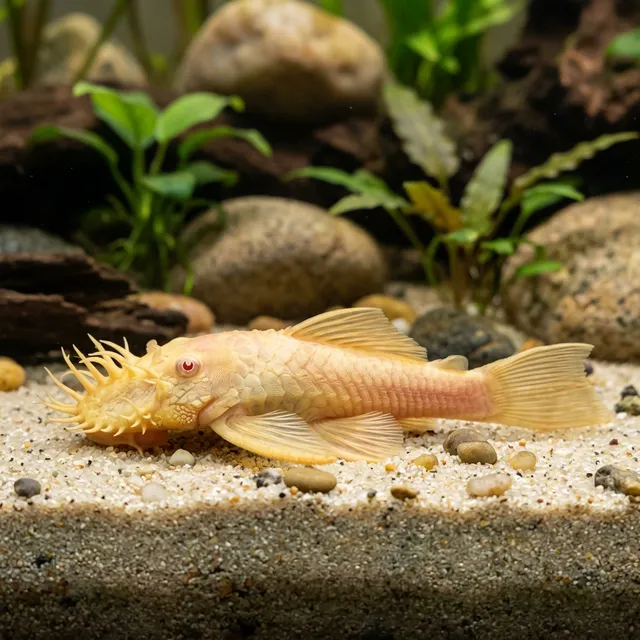
Albino Pleco is one of the most beautiful variants of the bristlenose pleco, with light-colored, almost white or yellowish skin and pinkish eyes that give it a look quite distinct from traditionally colored specimens. Beyond its aesthetic appeal, it retains all the practical qualities that make this fish so popular among those who deal with algae in small tanks: it tirelessly scrapes the glass, rocks, and wood, and brings a distinct personality to the tank, especially at dusk, when it becomes more active and goes out in search of food.
As always with this species, it’s important to note: a single fish can thrive in a 40-liter tank, but 60 liters or more is ideal. A space where this fish clearly feels more comfortable exploring and swimming. It’s not advisable to keep more than one specimen in a tank of this size, since the ancistrus grows to 10 to 15 centimeters and tends to be territorial toward others of the same species. On the other hand, it is surprisingly peaceful with fish of other species, making it a great choice for adding to peaceful schools without any drama. It readily accepts pieces of zucchini and seaweed tablets as a supplement to its diet, especially in tanks where natural algae isn’t enough to meet all its needs, at temperatures between 22 and 26 degrees.
Quick Comparison
| Species | Tank Size | Temperature | Best for |
| Otocinclus | 40L+ | 22-26ºC | Glass and leaf algae |
| Amano Shrimp | 40L+ | 22-27ºC | Black beard algae and stubborn algae |
| Cherry Shrimp | 20-40L+ | 20-26ºC | Thin layers of algae |
| Nerite Snail | 40L+ | 22-26ºC | Green and brown algae on glass |
| Sewellia Lineolata | 50-60L+ | 20-25ºC | Algae and biofilm on rocks |
| Ramshorn Snail | 20l+ | 18-28ºC | Soft algae and organic matter |
| Albino Bristlenose Pleco | 60L+ | 22-26ºC | Algae on hard surfaces |
Frequently Asked Questions
Can I keep several of these species together in the same tank?
Yes, you can. Just be careful not to overcrowd the tank and make sure to observe the minimum size requirements for each species. In a 40-liter tank, a good combination would be a small group of otocinclus with a few cherry shrimp and one or two nerite snails. However, if you want to keep Sewellia Lineolata or Ancistrus, it’s best to start with a 60-liter tank or larger, which provides ample space for these two more demanding species.
Will the snails take over my tank?
It depends on the species and the amount of food available. Nerite Snails do not reproduce in freshwater, so they’re safe in that regard. Ramshorn Snails, on the other hand, reproduce quite easily, and if left unchecked, they can even become a pest, although they remain a beautiful species to have around when the population is balanced.
Do these animals replace manual cleaning and water changes?
No, not at all. They’re a big help in controlling algae, but regular water changes and some maintenance on your part are still necessary. Think of them as a support team, not as a complete replacement for your care routine.
In short, you don’t need a large tank to have an effective algae-fighting team. These seven species prove that, even in a 40-liter tank, you can put together a small cleaning squad that works for you every day, without asking for much in return.