How to Keep Your Tank Water Crystal Clear
Cloudy, whitish, or yellowish water is one of the most common frustrations among tank keepers, especially for beginners. The good news is that there’s almost always a clear cause behind the problem, and the solutions are usually simple, natural, and don’t require harsh chemicals. This guide explains the most common causes and how to solve them in a practical way.
Whitish or Milky Water: Bacterial Bloom
If the water has suddenly become cloudy and whitish, especially in a relatively new or recently maintained tank, the most likely cause is a bacterial bloom. This occurs when there is a population explosion of heterotrophic bacteria, usually triggered by an excess of available organic matter, such as a newly cycled tank, a recent deep cleaning, or simply excess food decomposing without being consumed.
Although it may seem alarming, a bacterial bloom is not usually dangerous to fish, and it typically resolves on its own within a few days as the bacterial population stabilizes. You can speed up the process by reducing the amount of food you offer for a few days and by avoiding excessive disturbance of the substrate or filter while the bloom is ongoing, since this only releases more organic matter to fuel the problem.
Yellowish Water: Tannins from Wood and Leaves
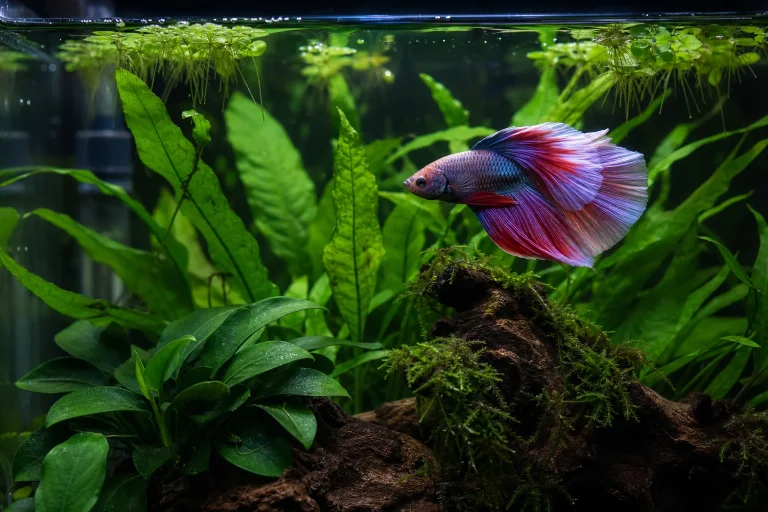
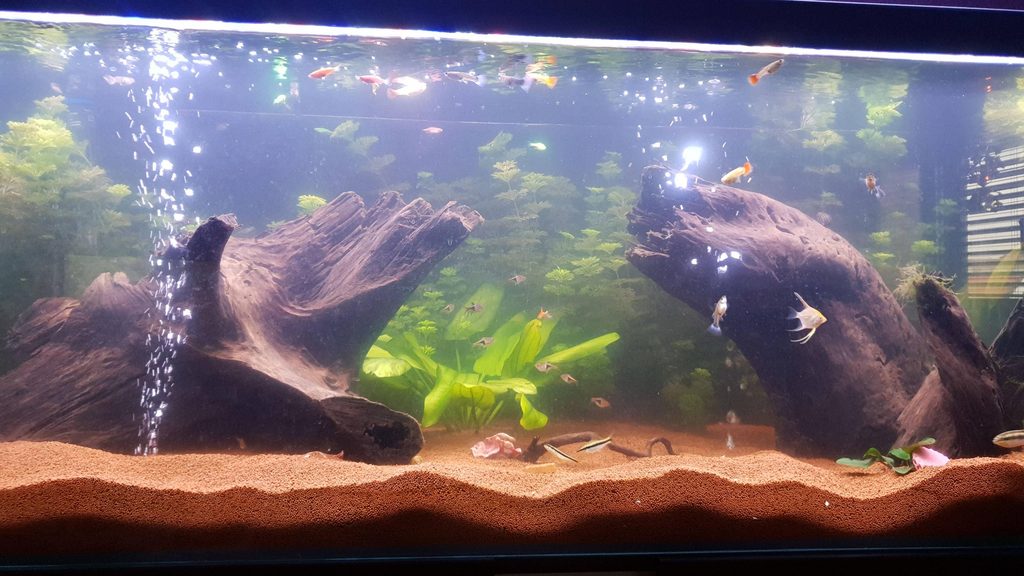
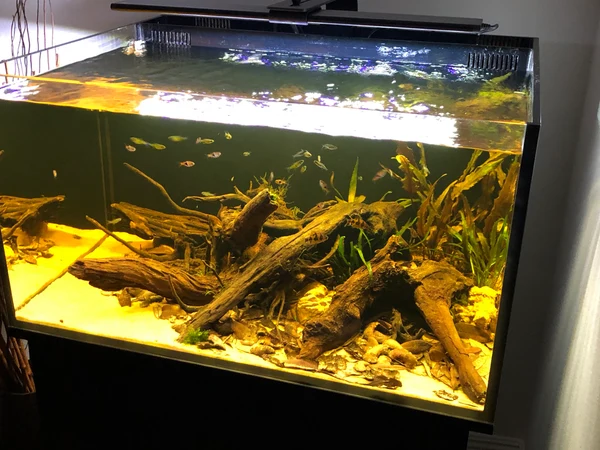
If the water has a yellowish or brownish tint but remains clear, without any cloudiness, the most common cause is tannins released by wood, dry leaves, or other natural organic materials used in the decor. This effect, often called “black water” when it is more intense, is completely natural and even beneficial for certain fish species, as it replicates their natural habitat, such as many tetras and bettas.
If you prefer clearer water, the solution is to use activated carbon in the filter, which absorbs a good portion of the tannins over time, or to perform water changes more frequently to dilute the concentration. You can also pre-treat new wood by soaking it in a separate container of water for one to two weeks before adding it to the tank, which significantly reduces the amount of tannins released later on.
Overeating and the Accumulation of Waste
Overfeeding fish is, without exaggeration, one of the most common causes of water quality problems in home aquariums. Uneaten food decomposes, releases ammonia, fuels bacterial blooms, and directly contributes to cloudy water and the buildup of waste in the substrate. The simple rule is to offer only the amount that the fish can eat in two to three minutes, and to remove any visible leftovers shortly thereafter.
Natural and practical solutions
There are several ways to keep the water clear without resorting to harsh chemicals, and most of them fit perfectly into a normal maintenance routine.
Controlling light duration. Excessive light exposure, especially in planted tanks, promotes the growth of microscopic algae that give the water a greenish tint. Between 6 and 8 hours of light is usually enough for most tanks, and reducing the light duration is often enough to resolve greenish water without any additional products.
Regular partial water changes. As mentioned above, partial water changes remain the most reliable method for removing accumulated waste, diluting excess substances, and keeping the water consistently clean over time.
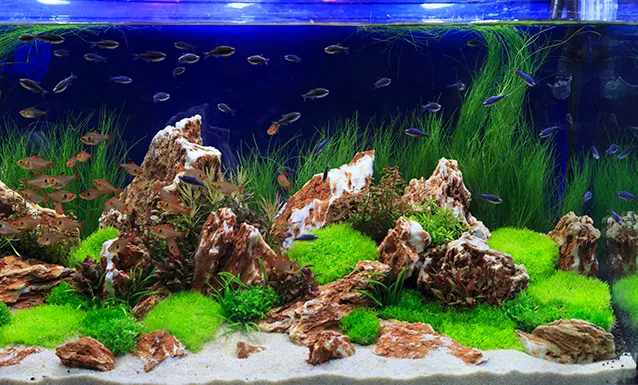
Fast-growing plants. Species such as Limnophila Sessiliflora or other fast-growing stem plants compete directly with algae for nutrients in the water, helping to maintain the system’s balance and reducing the likelihood of algae blooms that cloud the water.
Reducing the amount of food. Going back to the previous point, simply adjusting the amount of food provided and the feeding frequency resolves a good portion of water quality issues before you even need to take any other action.
A Quick and Practical Solution
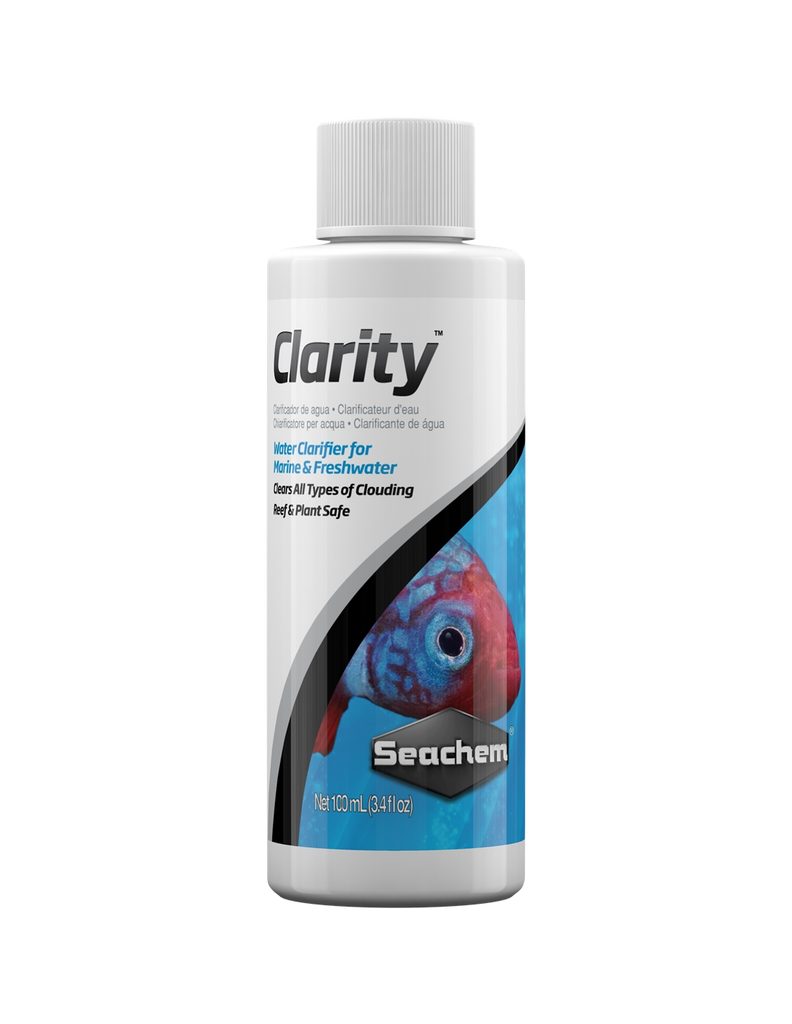
If what’s in the tank is just dust, the strategy will be a little different. In the long run, instead of using a simple sponge in the filter, you can use Perlon, which is much better at trapping dirt or dust or suspended particles in the tank, which will help a lot. But if you want quick results, Seachem Clarity will help you out in this annoying situation. Basically, when you add this product to the water, it activates immediately. It is made up of polymers that act like magnets. As they cling to all the dust and microscopic particles, they trigger a chemical reaction that creates a “cloud” and temporarily turns the water very white or brownish. A few hours later, since these particles will have clumped together into larger clumps, they can no longer pass through the filter as easily. That’s where the perlon comes into play, as it is finally able to trap them. Within a few hours, the water becomes completely crystal clear.
Warning! If your tank is small (like 30L) and you have shrimp, it’s best not to use Seachem Clarity. You run the risk of the shrimp dying, which would be a major loss. If your tank is 60L or larger, then it’s safe to use this product, and your problem will be completely solved.
Frequently Asked Questions
Is cloudy water always dangerous for fish?
Not necessarily. A bacterial bloom, for example, rarely poses a direct threat, although it’s always worth testing the water to rule out spikes in ammonia or nitrite as an alternative cause, especially if the cloudiness is accompanied by fish behaving strangely.
How long does it take for a bacterial bloom to clear up?
In most cases, a week is enough, as long as you reduce feeding and avoid disturbing the system too much while it clears up on its own.
Are the tannins from driftwood harmful to fish?
No, and many species actually benefit from this environment, which is closer to their natural habitat. The issue is purely aesthetic for those who prefer completely clear water.
Is Seachem Clarity dangerous to fish or plants?
No, Seachem Clarity is non-toxic and completely safe for the vast majority of aquariums. It is formulated to be harmless to both fish and live plants. Just be extra careful if you have shrimp in a small tank, as it can affect their health and even lead to death.
In short, cloudy, yellowish, or suspended particles in the water almost always has a simple cause and a solution that any aquarist can implement. With proper lighting control, good filter media, regular water changes, fast-growing plants, a balanced diet, or the use of Seachem Clarity, crystal clear water will become the norm, not the exception, in your tank.
If, after reading this article, you feel that your tank really needs Seachem Clarity to clear up that cloudy water, you can check out the product by clicking the button below.