5 Hardy Fish That Are Ideal for Beginners
Choosing your first fish is one of those decisions that seem simple at first glance but can determine whether your introduction to the hobby will be a rewarding experience or a series of costly frustrations. The good news is that there are truly hardy species that are forgiving of the typical mistakes made by beginners. On top of that, they’re beautiful and full of personality. Here are five of them, chosen precisely for that balance between sturdiness and charm. And at the end of the article, I’ll also include a bonus fish. One of the best allies you’ll find for keeping the wood and leaves free of algae with minimal effort on your part.
1. Cardinal Tetra
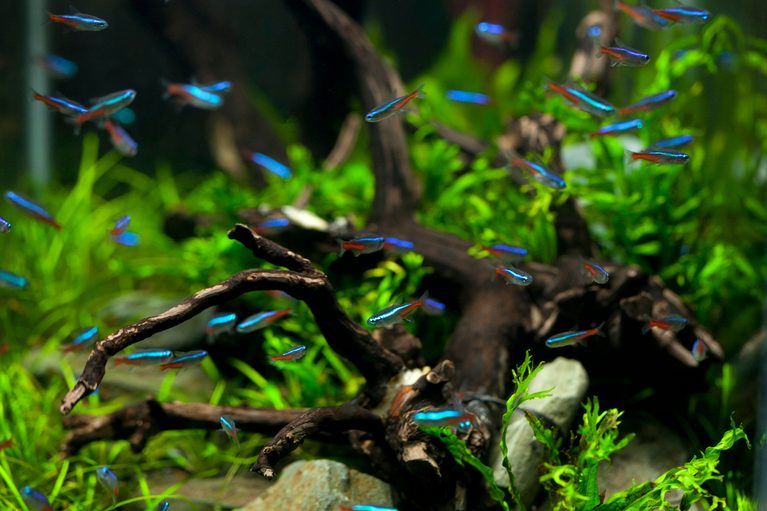
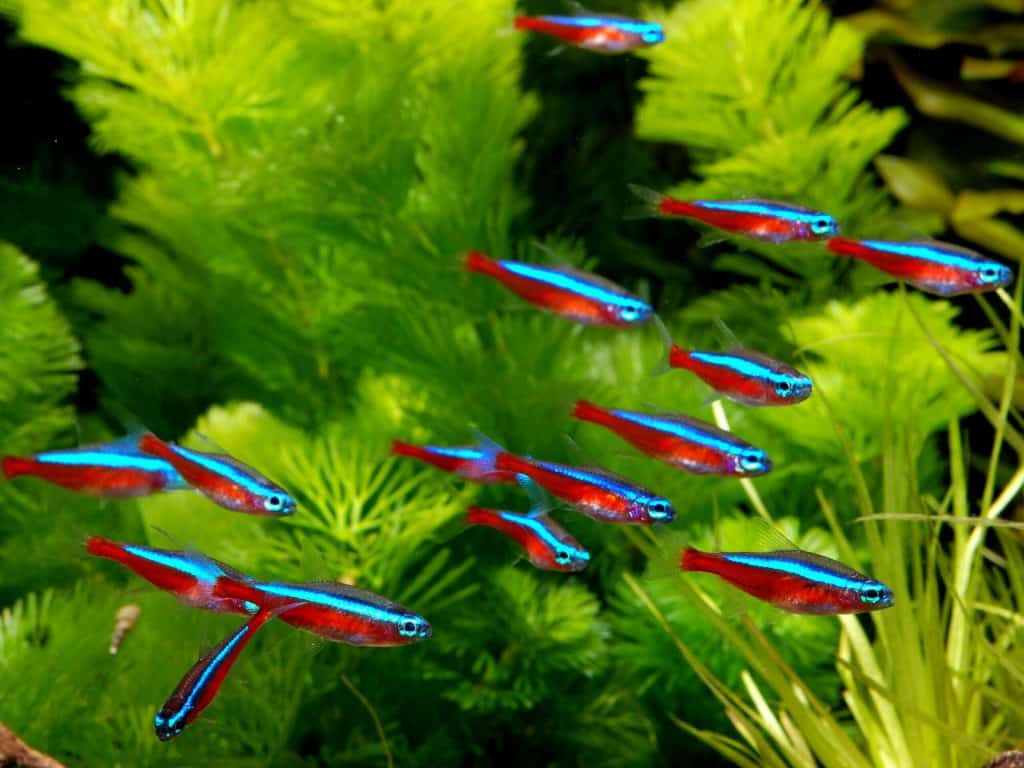
The Cardinal Tetra is probably one of the most photographed fish in the entire aquarium hobby, and it’s no coincidence. That neon blue stripe running along its body, contrasted with the bright red on its underside, adds an almost hypnotic glow to any tank, especially when they swim in a school with the right lighting from above. Despite its delicate appearance, it is a surprisingly hardy fish, as long as the water maintains some basic stability in temperature and quality.
It thrives best in groups of at least eight to ten individuals, as this species shows visible signs of stress when kept in small numbers. A 40-liter tank or larger, with a temperature between 23 and 27 degrees, is usually a good starting point. It has modest dietary requirements and thrives in planted aquariums, where the green background makes its colors stand out even more.
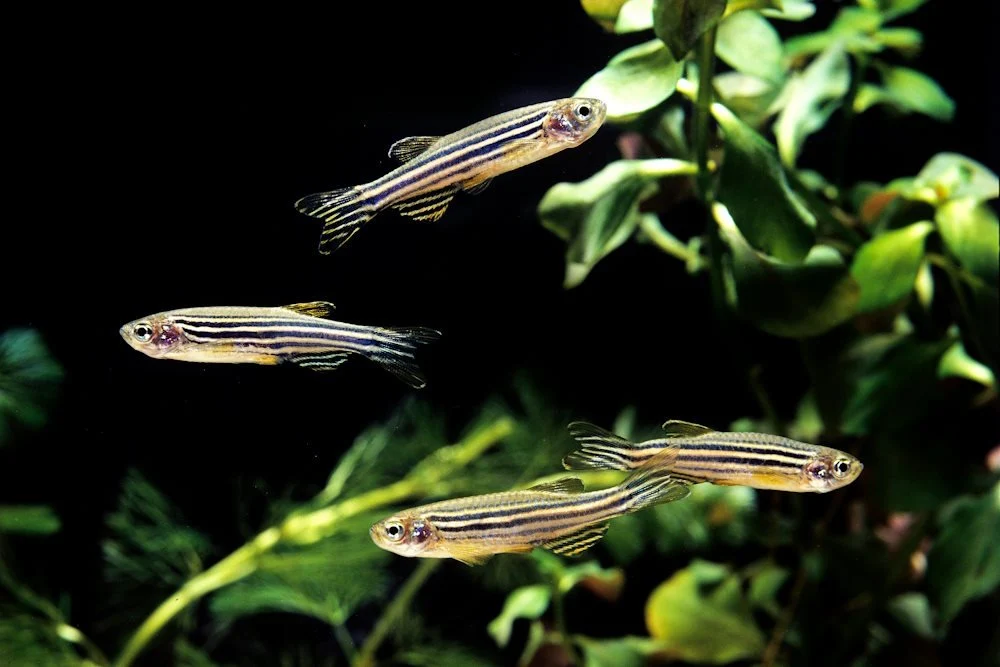
2. Zebra Danio
The Zebra Danio, also known as the zebrafish or danio rerio, is one of those species that seems to have been designed for absent-minded beginners. It is extremely resilient to fluctuations in temperature and water quality, highly active, and loves to swim in schools in the upper and middle zones of the tank, adding a lot of visual dynamism to the overall display. It is also one of the species most commonly used in scientific research precisely because of its genetic robustness, which speaks volumes about its ability to survive less-than-ideal conditions.
It thrives best in groups of at least six individuals, in a 40-liter tank or larger, at a temperature between 18 and 24 degrees. So, cooler than most tropical species, which makes it an interesting option for those who don’t want to invest in a powerful aquarium heater right away. It feeds easily on flakes or small live foods.
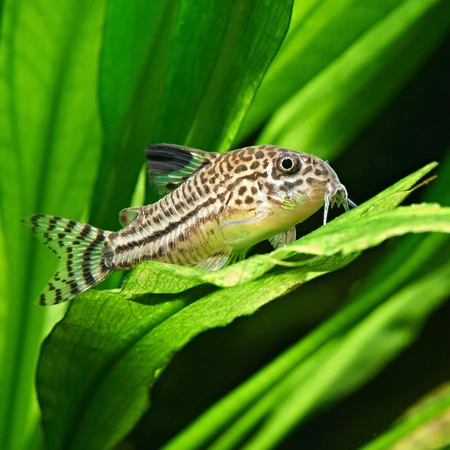
3. Catfish Corydoras
If you’re looking for a bottom-dwelling fish that’s also hardy and easy to care for, corydoras are the right choice. These small catfish, with their almost comical way of moving along the bottom of the tank, are excellent natural cleaners, helping to gather food scraps that fall to the bottom, although this in no way replaces proper feeding and regular maintenance. They are extremely sociable and should always live in groups of at least six individuals of the same species, as they show visible signs of stress when kept alone or in small numbers.
They need a soft substrate, such as sand, so they don’t injure the sensitive fins they use to search for food on the bottom. A 40-liter tank or larger, with a temperature between 22 and 26 degrees, is usually a good starting point. They will eat bottom-feeding pellets, blanched vegetables, and food scraps that fall from fish in the upper water column.
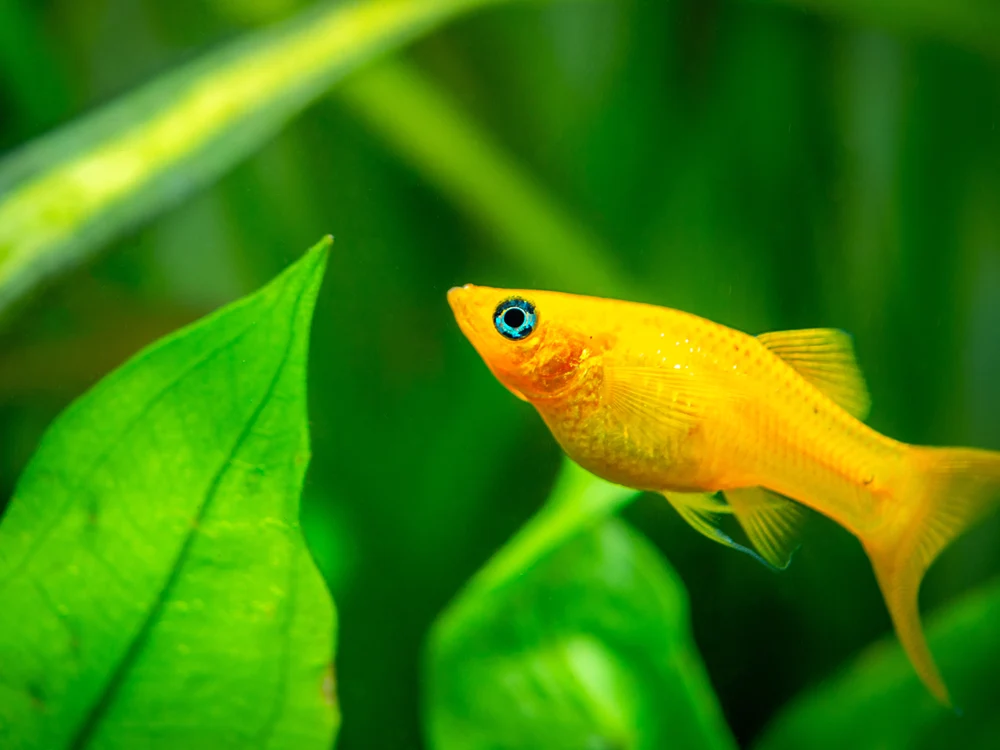
4. Yellow Molly
The yellow molly, the vibrant yellow variant of the classic molly, combines the species’ typical hardiness with a color that immediately stands out in any community aquarium. It is tolerant of fluctuations in water conditions, adapts well to different types of setups, and even does reasonably well in slightly brackish water, making it quite versatile for those who like to experiment. It enjoys living in groups, ideally with more females than males to reduce reproductive harassment among the males. It is an omnivore with few dietary requirements, readily accepting flakes, blanched vegetables, and occasional live food.
A 40-liter tank is usually sufficient for a small group, with a temperature between 24 and 28 degrees. As always, it’s worth noting that they breed quite easily, so be prepared for unexpected fry from time to time, especially if you keep males and females together.
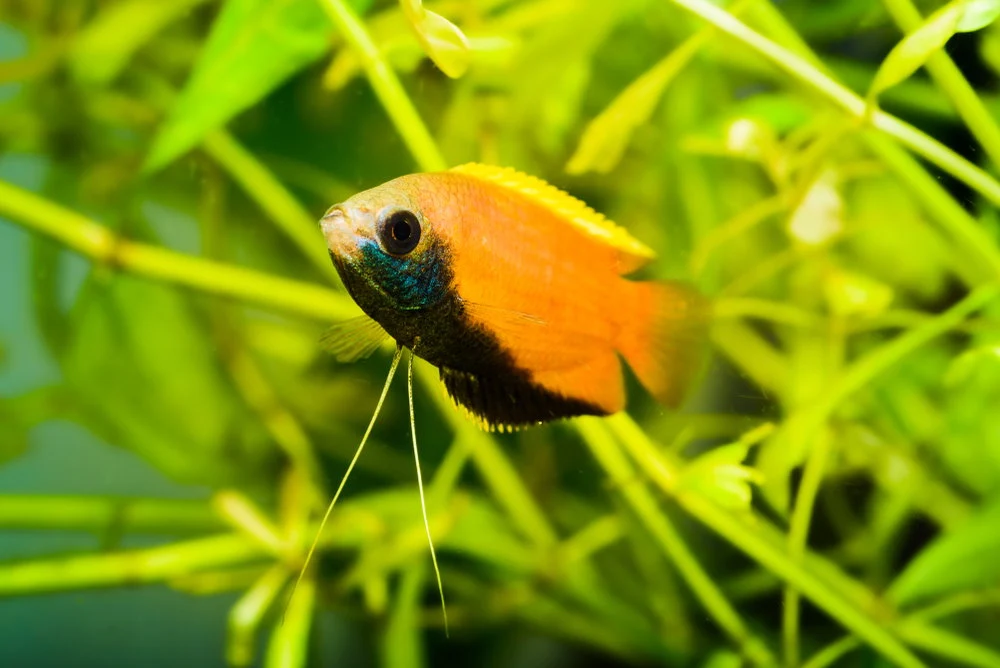
5. Honey Gourami
The honey gourami is the right choice for anyone looking for a peaceful fish, slightly larger than others, with plenty of personality, but without the more territorial temperament of other larger gouramis. Its golden color is what gives it its name, and it looks particularly beautiful in a planted aquarium, with soft lighting that highlights the shimmer of its scales. It is also a labyrinth fish, which means it can breathe atmospheric oxygen through a special organ, making it more tolerant of water with slightly lower levels of dissolved oxygen than other species would require.
It does well on its own, unlike many species on this list that require schooling. It prefers an aquarium with plants and a few hiding spots where it can retreat whenever it feels like it. A 50- to 60-liter tank is sufficient for a single fish, with a temperature between 22 and 28 degrees. It will eat flakes, small pellets, and live food, and usually gets along well with other peaceful species already mentioned.
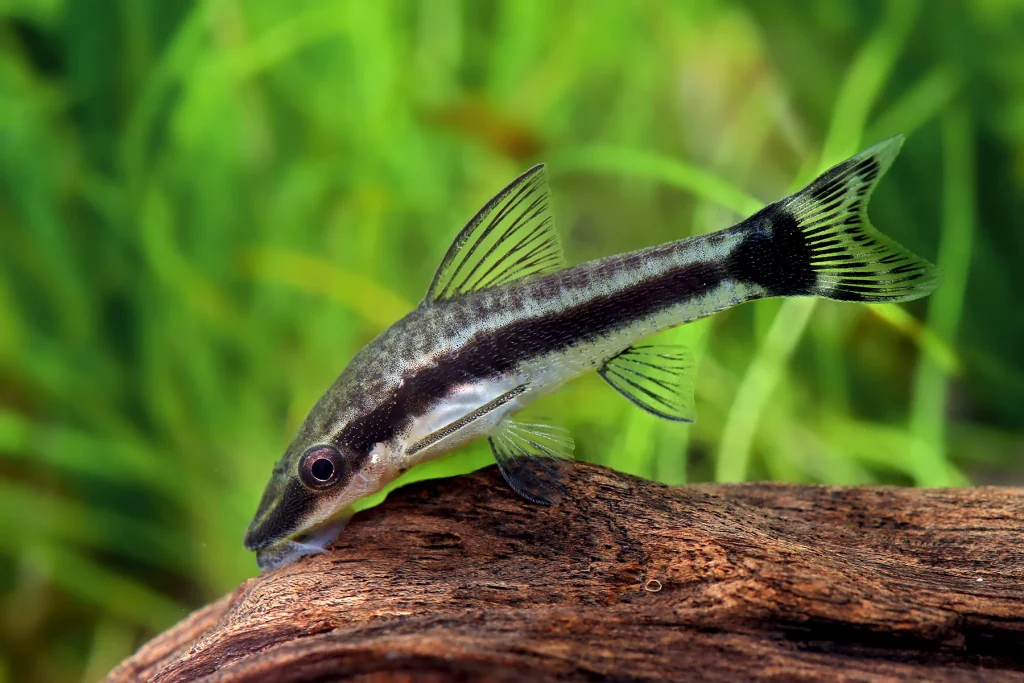
#Bonus Fish: Otocinclus
As promised at the beginning, this is the bonus fish. The otocinclus is a small, unassuming, and almost shy catfish that spends much of the day clinging to wood or plant leaves, scraping off algae with impressive dedication for a fish the size of a finger. If you’ve been having trouble with brown or green algae films covering your hardscape, a small group of 6 otocinclus usually helps a lot.
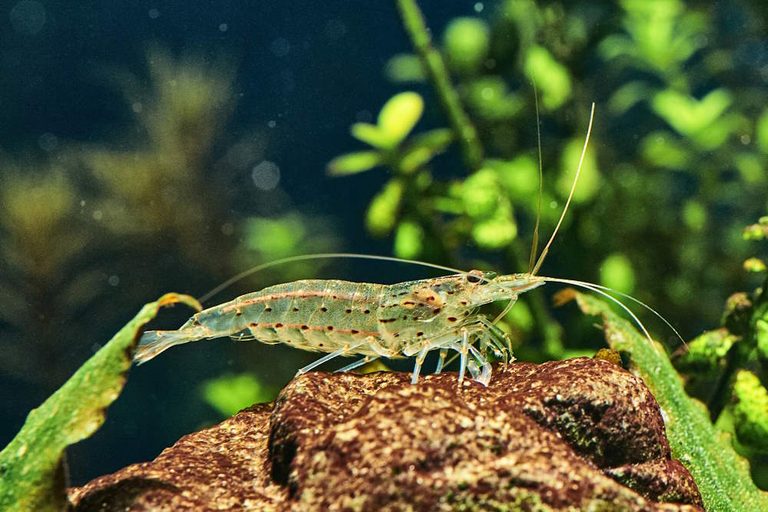
It’s usually an extremely peaceful fish and never bothers anyone in the tank. The otocinclus is one of the few fish you can add as early as the fourth week of setting up the tank, helping right away with the initial cleanup, along with some Amano shrimp. They thrive best in groups of at least four to six individuals, in a 40-liter tank or larger, with a temperature between 22 and 26 degrees. To supplement their diet, it’s a good idea to regularly offer a few sinking tablets or pieces of blanched zucchini, especially if the aquarium doesn’t have enough algae for everyone.
Quick Comparison
| Species | Tank Size | Temperature | Social Level |
| Cardinal Tetra | 40L+ | 23-27ºC | Large school (8–10+) |
| Zebra Danio | 40L+ | 18-24ºC | Active school |
| Catfish Corydora | 40L+ | 22-26ºC | School, sensitive when alone |
| Yellow Molly | 40L+ | 24-28ºC | Group, it is easily reproduced |
| Honey Gourami | 50-60L | 22-28ºC | Alone or in a small group |
| Otocinclus | 40L+ | 22-28ºC | Group (4-6+) |
Frequently Asked Questions
Can I keep these five species together in the same tank?
Generally speaking, yes. They’re all peaceful species and get along well together, as long as the aquarium is large enough for all of them and the water is cycled and stable before you add them.
Which of these fish is the easiest of all for a complete beginner?
The Zebra Danio usually takes the crown, thanks to its combination of extreme hardiness, wide availability in any store, and tolerance for minor care mistakes.
Does the honey gourami get along with schooling fish like cardinal tetras?
Yes, without any major problems. The honey gourami is peaceful and usually ignores small, active schools like cardinal tetras, as long as the tank has enough space and hiding spots for everyone to feel comfortable.
In short, these five species are an excellent starting point for anyone who wants to learn about keeping a tank without constantly worrying about the fish’s health. They’re hardy, beautiful, and perfect for building your confidence before moving on to more demanding species.