Anubias Care Guide: The “Impossible-to-Kill” Plant for Beginners
If there’s one plant in the hobby that’s reputed to be indestructible, it’s Anubias. Some people say, half-jokingly, but not entirely, that it’s easier to kill the entire tank than to kill an Anubia, and the truth is that this reputation isn’t an exaggeration. It’s hardy, adapts to a variety of conditions, survives weeks of neglect, and remains green and sturdy when other plants have long since given up. For anyone taking their first steps into the world of aquatic plants, it’s practically the perfect choice.
Why is Anubias so hardy?
Anubias is native to freshwater areas of West Africa, where it grows clinging to rocks and roots in streams and along shaded banks, often partially out of the water. This habitat explains virtually everything that makes it special in captivity: thick, leathery leaves that are highly resistant to physical damage, slow growth that requires little energy, and a remarkable tolerance for low light, since in nature it often lives in the shade of riparian vegetation.
This slow growth, which some see as a disadvantage, is actually part of the secret to its resilience. A plant that grows slowly consumes few nutrients, does not depend on additional CO2, and does not collapse when conditions fluctuate slightly. It is the opposite of fast-growing plants, which demand a constant supply of everything and falter at the first sign of trouble.
Lighting
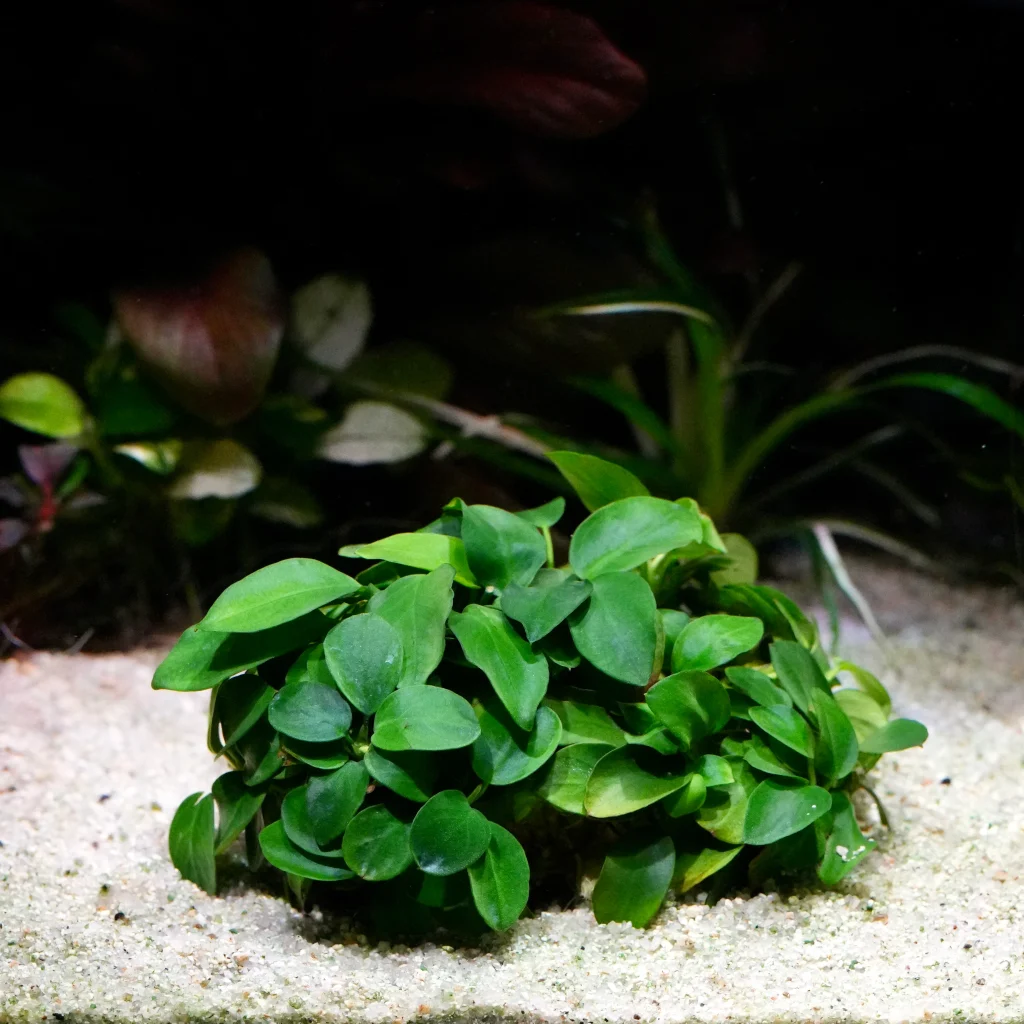
Anubias prefers low to moderate light, and this is a point where many people are mistaken in assuming that more light means better growth. With lighting that is too strong, Anubias does not grow any faster, because its growth rate is limited by its own genetics. What happens is that the leaves, which remain in the same place for months, are exposed to intense light for long periods of time and end up covered in algae, especially green spots and tuft-like algae.
The ideal photoperiod is between six and eight hours a day, and placing the Anubias in a shadier area of the tank, under taller plants or next to decorations that provide shade, usually yields the best results in the long run.
Water Parameters
This is the simplest chapter in this guide, because Anubias tolerates practically anything that’s reasonable in a freshwater tank. It thrives at temperatures between 22 and 28 degrees and handles pH levels between 6.0 and 7.5 well without showing signs of stress. It does not require a nutrient-rich substrate, since it absorbs nutrients primarily through its leaves and roots exposed to the water column.
Occasional liquid fertilization helps keep the leaves a deeper green, but it is not necessary, especially in tanks with fish, where natural waste already provides most of the nutrients this plant needs.
The Golden Rule: never bury the Rhizome
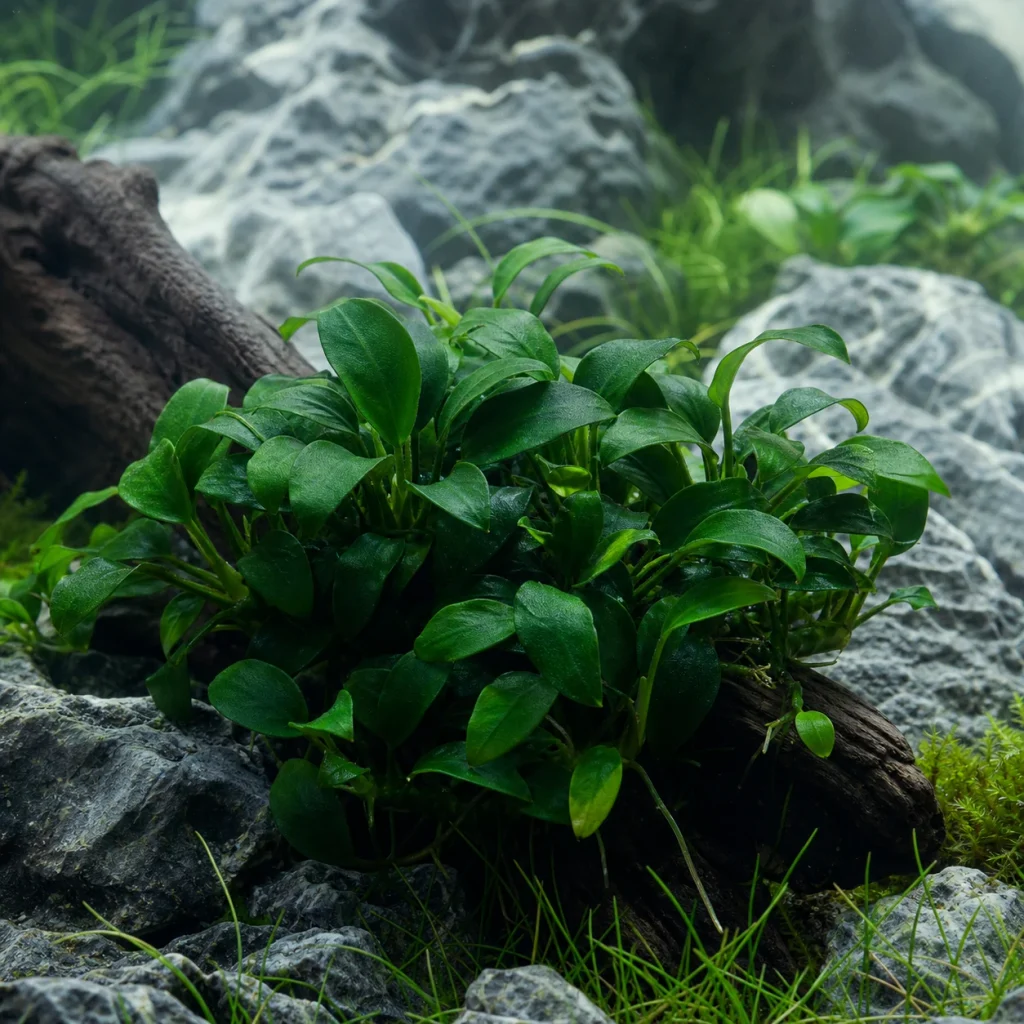
Here’s the only mistake that can actually kill an Anubias, which is why it deserves its own section. The rhizome is that thick, horizontal, darker-colored structure from which both the leaves and roots emerge. It looks like a sturdy stem, and it’s precisely this appearance that leads so many people to bury it in the substrate, thinking they’re planting it correctly.
When the rhizome is buried, water can no longer circulate around it, and it begins to rot. The process is slow and silent: the leaves look fine for weeks, until suddenly they start to turn yellow and fall off, and when you finally pull the plant out, the rhizome is soft and discolored, with no chance of recovery.
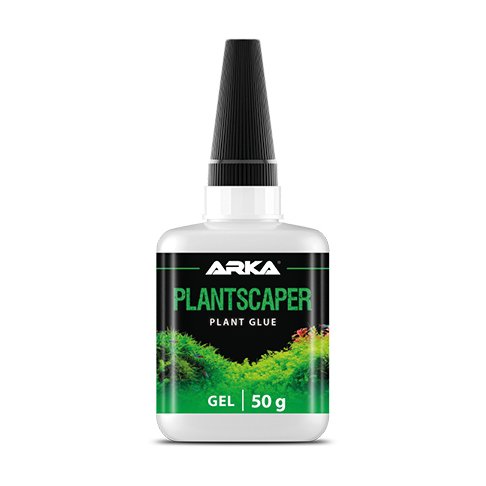
The correct way is to attach the Anubias to some wood or a rock, leaving the rhizome exposed to the water. You can use clear fishing line or glue specifically designed for aquatic plants, applying a small dab of glue directly to the root or rhizome. The roots will cling to the surface on their own over the next few weeks, and after a while you won’t even need the string anymore, because the plant will anchor itself.
If you want it very close to the substrate, the trick is to bury only the roots, keeping the rhizome above the surface of the gravel.
Propagation
Propagating Anubias is simple and doesn’t require any special equipment. Just cut the rhizome with a clean blade, making sure each piece has at least three or four leaves and a few roots of its own. Then simply attach each piece to its own log or rock, and from there, each one will grow on its own as an independent plant.
It’s best to make the cuts with a sharp blade rather than tearing the rhizome, to minimize the damaged area and reduce the risk of rot at the cut site.
Most Common Varieties
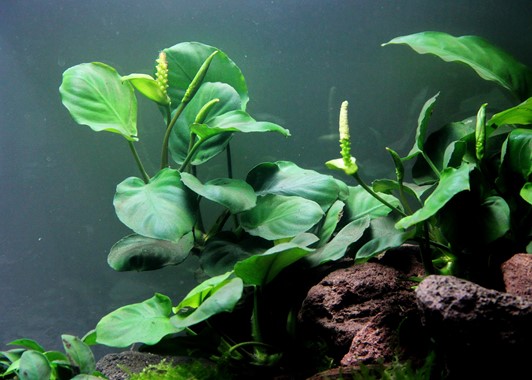
Anubia Nana is the most popular variety among beginners, with small leaves and a compact growth habit that works well in the foreground and in smaller tanks. Anubia Nana Petite takes this concept even further, with tiny leaves that are ideal for attaching to small rocks and adding detail. Anubias Barteri, on the other hand, has much larger leaves and works best as a focal point in tanks with more space.
Common Mistakes to Avoid
Burying the rhizome in the substrate. We’ve already discussed this in detail, but it happens so often that it’s worth hammering the point home: a buried rhizome is a doomed rhizome.
Providing too much light. It doesn’t speed up growth and only encourages algae to grow on the leaves, which remain exposed in the same spot for months.
Expecting rapid growth and concluding that the plant is sick. One new leaf per month is already a perfectly normal growth rate for this species. Patience is part of the deal.
Routinely cutting healthy leaves. Unlike stem plants, Anubias do not need regular pruning. Remove only leaves that are visibly damaged or covered with algae.
Frequently Asked Questions
My Anubia has holes in its leaves, what does that mean?
It could be a lack of nutrients, especially potassium, or damage caused by fish nibbling on the leaves. Regular liquid fertilization usually resolves the first issue.
Can I keep Anubias without CO2?
Absolutely! This is actually one of the best plants for tanks without CO2 injection.
The leaves of my Anubia are covered in algae. What should I do?
Reduce the photoperiod, move the plant to a shadier spot, and consider manually cleaning the most affected leaves. Since Anubias has sturdy leaves, it can withstand careful cleaning with your fingers or a soft brush.
In short, Anubias are the ideal starting point for anyone who wants live plants without getting bogged down in technical complications. Give it moderate light, keep the rhizome above the substrate, and this plant will be with you for years with almost no maintenance.
If, after reading this article, you feel that your tank really needs a safe and easy way to attach your Anubias to rocks or wood, you can check out ARKA Plantscaper Glue by clicking the button below.