CO2 in the Aquarium: Is It Really Necessary for a Healthy Planted Tank?
Sooner or later, this question pops into the minds of almost everyone who falls in love with planted tanks. You see photos and videos of dense, lush aquascapes, and your first reaction is usually to think you need an expensive and complicated CO2 system to achieve that look. The truth, like almost everything in the hobby, is more nuanced than that, and it’s worth understanding both sides thoroughly before spending money unnecessarily.
What Does CO2 Do in a Planted Aquarium?
Aquatic plants use carbon dioxide, along with light and mineral nutrients, to photosynthesize and grow healthily. In natural environments, the CO2 dissolved in the water is usually more than enough to support steady, balanced growth. The problem begins to arise when you significantly increase the light intensity inside the aquarium, usually to achieve more colorful or faster-growing plants: this extra light creates a demand for CO2 that the water, on its own and without assistance, typically can no longer meet. This is precisely where artificial CO2 injection comes into play.
It’s worth thinking of this balance as a scale with three pans: light, nutrients, and CO2. Which must always be in harmony with one another and never considered in isolation. As soon as one of these factors spikes without the others keeping pace, such as strong light with little CO2 available, the most likely result isn’t lush plants, but algae taking advantage of the imbalance to their benefit. And among these algae is an old acquaintance of many aquascapers: Black Beard Algae, that dark, stubborn pest that loves to take hold precisely when CO2 levels are unstable.
Is it possible to have a beautiful setup without CO2?
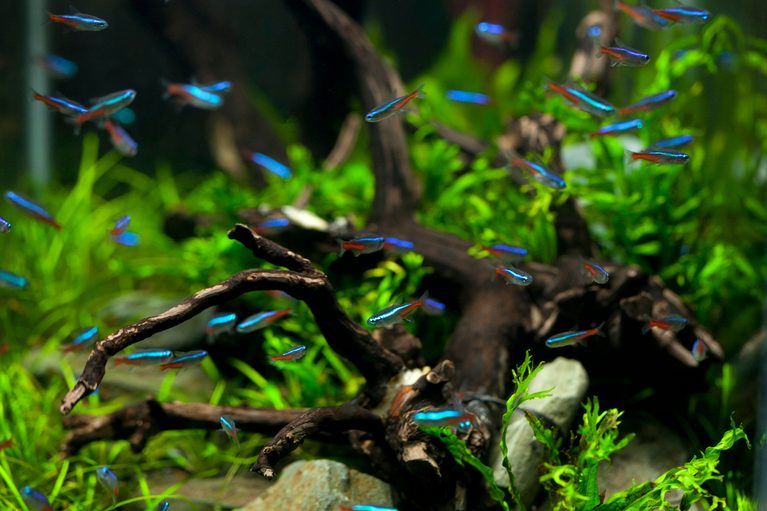
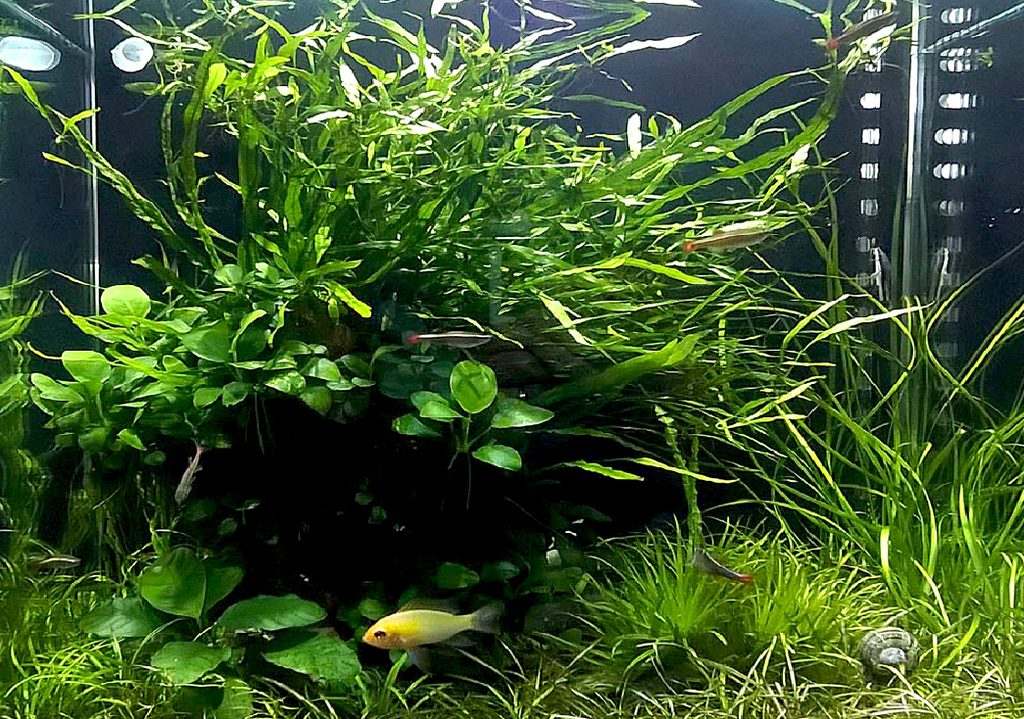
The short answer is yes, it definitely works. The so-called “low-tech” setup is a popular and very rewarding approach that relies on low to moderate lighting and plant species that have evolved to thrive in conditions with low CO2 levels in nature. Anubias, Java Fern, Limnophila sessiliflora, and various Cryptocoryne species are classic examples of plants that thrive in this type of environment without any additional CO2 injection.
For those who choose this path, a few rules go a long way toward maintaining balance. Stick to low to moderate light levels, because strong light without enough CO2 is practically a handwritten invitation for algae to take hold. Fertilize sparingly, in line with these plants’ slower growth rate, since excess nutrients without CO2 to “consume” them also encourage algae growth. Above all, be patient: it takes much longer for the tank to establish itself, but in return, it becomes much easier to keep the tank in balance over the months, with far fewer unpleasant surprises to ruin your weekend.
The main advantage of this approach is precisely its simplicity and stability. With no CO2 to manage, there’s one less variable to worry about, and the risk of algae blooms caused by an imbalance is much lower. Although you still need to pay close attention to the lighting. The downside is the pace: certain more demanding species simply won’t thrive in this type of setup, no matter how patient you are.
Are there situations where CO2 actually makes a difference?
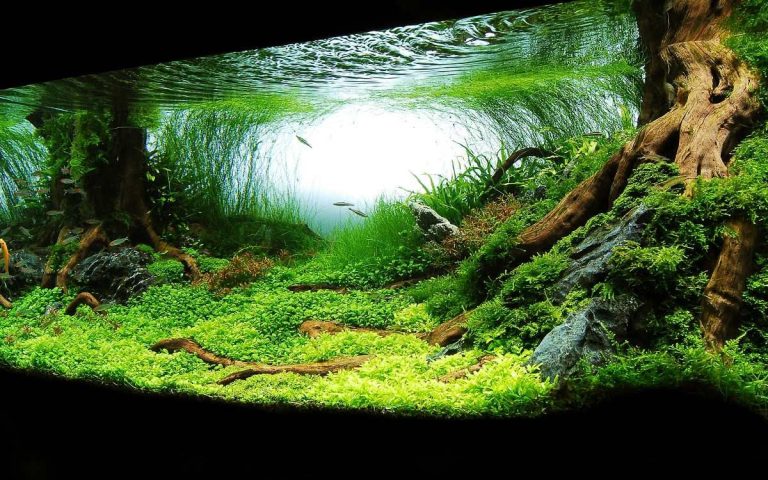
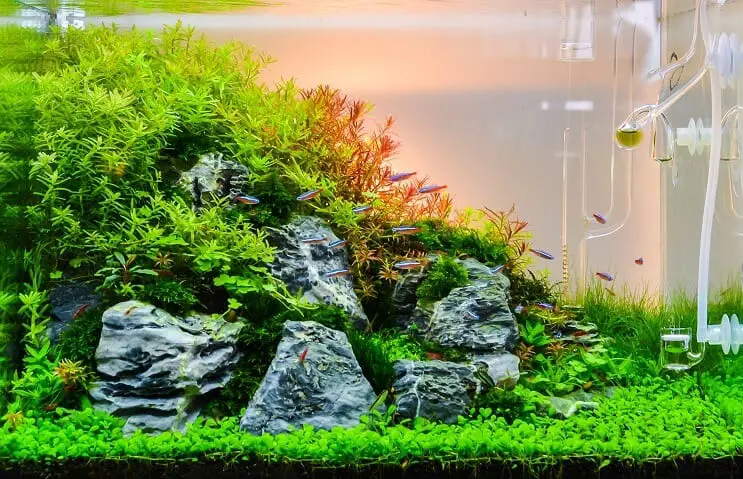
If your goal is a dense and ambitious aquascape, with uniform green carpets and fast-growing plants like Rotala, Hemianthus callitrichoides, or Ludwigia, then CO2 is no longer a luxury but practically a prerequisite for success. These species require a rate of photosynthesis that the CO2 naturally present in the water cannot sustain, especially when combined with the stronger lighting they typically need to develop color and density. Without enough CO2, the combination of strong light and good fertilization almost always leads to serious and persistent algae problems.
With CO2 properly managed, the benefits quickly become apparent. Plant growth accelerates significantly, with results appearing in weeks rather than months. This makes it possible to grow much more demanding species and dense ground covers that would otherwise never survive. Over time, balancing lighting, nutrients, and CO2 becomes easier to manage on a day-by-day basis, because you now have all three variables directly under your control, rather than relying solely on what the water can provide on its own.
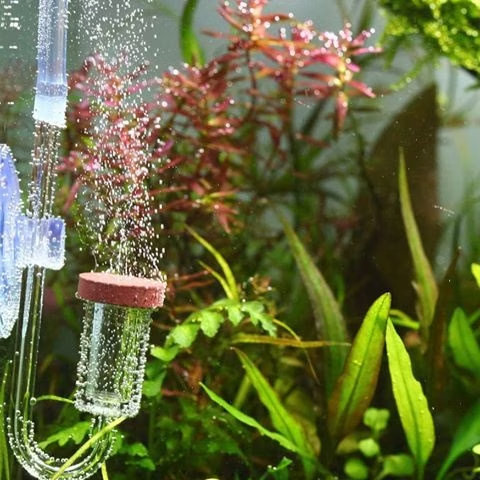
The price you pay for all of this is constant, genuine attention. Inconsistent CO2 levels are precisely one of the most common causes of algae blooms in more advanced aquascapes, which makes CO2 a double-edged sword: when managed well, it transforms your tank, when mismanaged, it creates more problems than it solves. The initial investment in equipment: a bottle or cylinder, a pressure regulator, a diffuser, and ideally a drop checker for visual monitoring will also takes a bigger bite out of the budget than a simple filter and a basic light bulb.
How to Decide What’s Best for You
Ask yourself honestly what kind of experience you’re looking for. If you want a beautiful, relaxing, low-maintenance planted tank without any major technical hassles, a well-planned low-tech setup will suit you perfectly, and on top of that, it’ll save you money and keep things simple. If, on the other hand, you dream of an incredible aquascape, full of detail and density, and you’re genuinely willing to devote time to regularly monitoring and adjusting the system, investing in CO2 will clearly be worth it.
There’s no one-size-fits-all answer for everyone. All I can say is: the right answer for you is basically what you want for your hobby.
Frequently Asked Questions
Can I start without CO2 and add it later if I change my mind?
Yes, this transition is perfectly possible and actually quite common among aquarists whose interests evolve over time. The best approach is to introduce CO2 gradually, closely observing the fish’s behavior and adjusting the lighting accordingly.
Is CO2 dangerous for fish?
When properly managed and monitored, it poses no real danger. In excess, however, it reduces the amount of oxygen available in the water and can cause serious breathing difficulties. Therefore, a drop checker and good surface aeration are ideal, especially at night, when the CO2 supply is usually turned off.
Does a tank without CO2 always have fewer plants than one with CO2?
Not necessarily in terms of quantity, but certainly in terms of the variety of species available and the rate of growth. It’s perfectly possible to have a well-stocked, lush tank without CO2, but with a more limited selection of plants to choose from.
Are there cheaper alternatives to CO2 cylinders?
Yes, home brewing kits with yeast and sugar are a much more economical option to start with, although they provide a less consistent supply throughout the day. They can serve as a good starting point before you move on to a more robust and reliable pressurized system.
In short, CO2 isn’t necessary for having a beautiful, healthy planted tank. But if you want to take it to the next level, with higher plant density, more demanding species, and faster results, it becomes practically indispensable, and it requires a real, ongoing commitment to maintenance over time. The final choice depends entirely on the kind of aquarist you want to be.