How to Get Rid of Black Beard Algae
If you have Black Beard Algae in your tank, you know the drill: you scrub, trim, and clean, and two weeks later the dark clumps are back, as if they’d asked permission to return. BBA is the most stubborn algae in the hobby, and the reason is simple: almost everyone treats what they see and ignores what feeds it. In this guide, we’ll do the opposite: First, you’ll understand why it comes back, then, you’ll choose the right path for your tank, and finally, you’ll learn how to keep it away. I should warn you that there’s an uncomfortable truth in there: without CO2, the BBA will always try to come back.
What is the BBA?
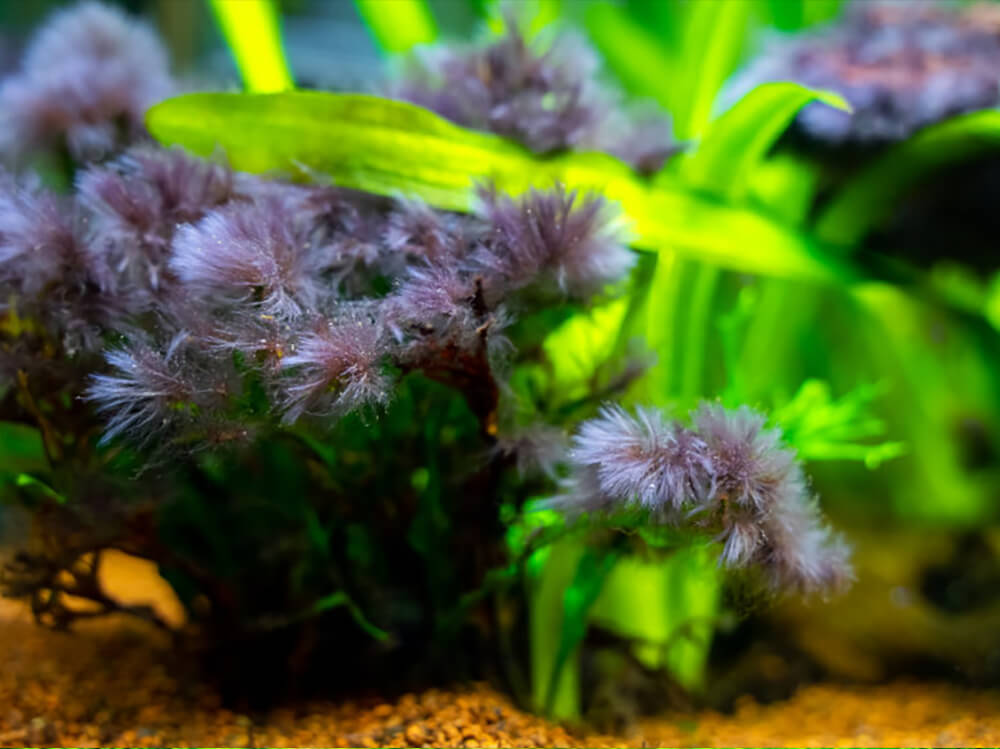
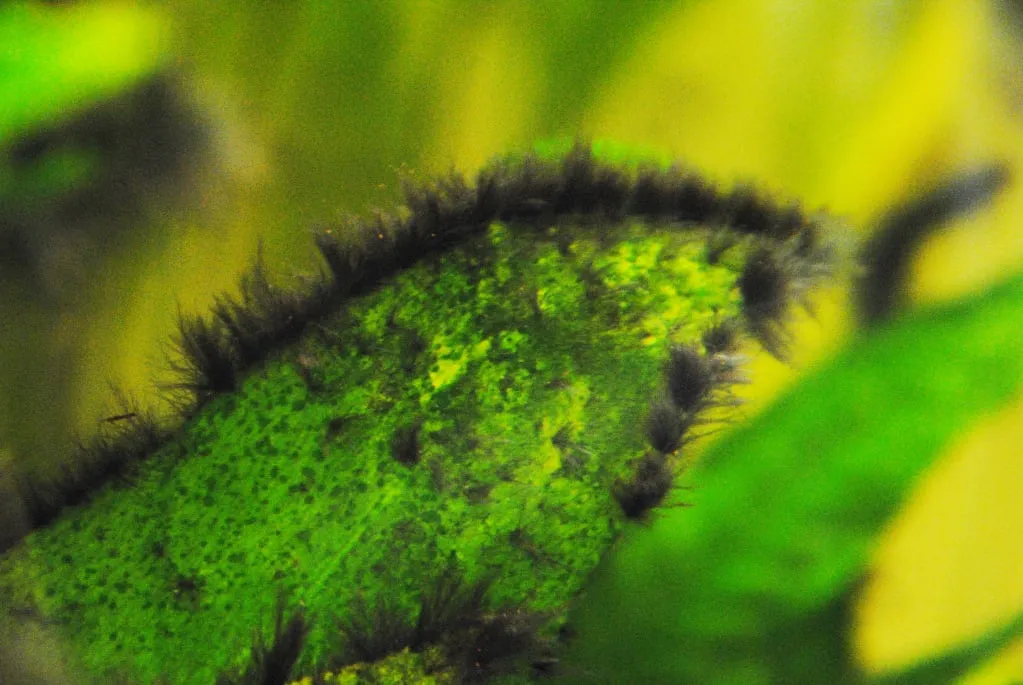
Black Beard Algae belongs to the red algae group, which is why it can withstand many of the same conditions that kill common green algae. It appears in dark, rough, dense clumps clinging to the edges of leaves, wood, rocks, and pieces of equipment, and tends to settle in areas where the water flow is strongest. It doesn’t harm fish, but it covers plants, blocks their light, and spoils the appearance of the tank.
Why BBA always come back?
The most common cause of BBA is an imbalance between light and available CO2. When light is strong and CO2 is scarce or unstable, plants cannot utilize all the energy they receive, and BBA takes advantage of the gap. The same thing happens when CO2 levels fluctuate throughout the day, with peaks and drops instead of a steady supply.
Here’s the uncomfortable truth: in a tank without CO2 and with moderate or strong lighting, this imbalance occurs every day. You can clean the algae, treat it, even eliminate it completely, but if the underlying cause remains, the BBA will return. Treating the algae without addressing the cause is like trying to dry ice.
The Three Paths
| Method | For who | Effort | Cost | Result |
| Stable CO2 | Those who want to address the root cause | Moderate (monitoring) | Higher initial investment | Long-lasting |
| Seachem Excel every day | Anyone who can’t use CO2 | Daily, but quick | Low, recurring | Lasts as long as you keep dosing |
| Just removing the algae | No one | Repeated | Low | The algae comes back |
The third path is found in the table of purpose. It’s the one most people follow without realizing it, and the result repeats itself with each cycle. Let’s look at the other two bellow.
Step 1: Remove any existing algae
Before addressing the root cause, remove what’s visible. Cut off the most affected leaves, especially on fast-growing plants, which recover easily. On hard surfaces, such as wood and rocks, you can brush off the algae and apply hydrogen peroxide (3% solution) with a syringe (with the filter turned off) and let it sit for ten to fifteen minutes. An Amano shrimp or a Siamese clownfish can provide extra help, since they happily eat BBA.
But be careful: this step only clears the data. If you stop here, you’re on the third path in the table.
Step 2: Fix the cause
Option 1: Stable CO2
This is the fundamental solution because it restores the balance between light, nutrients, and CO2. The key word is stability. A CO2 system that’s turned on irregularly is just as bad as having none at all, so turn on the injection one to two hours before the lights come on, turn it off one hour before they go out, and use a drop checker to monitor the level. Always ensure good circulation throughout the tank and good surface agitation at night so the fish can breathe effortlessly. With stable CO2 levels, the plants can once again make the most of the light, and the BBA loses its advantage.
Option 2: No CO2, Seachem Excel every day
If you can’t or don’t want to invest in CO2, there’s an alternative option, but it requires discipline. Seachem Excel is an organic carbon-based product that plants can utilize, and it’s also toxic to BBA. Used every day, it keeps the algae under control. The golden rule is this: you have to do it every day. The algae can still grow because the underlying imbalance hasn’t been resolved, and the product merely slows its growth. The day you stop adding it, the algae will reappear. It’s worth noting that Seachem Excel can burn the leaves of certain plants, even causing the plant to die.
For this option to work, follow these rules:
Administer the treatment every day at the same time. Establish a routine. For example: when you turn on the lights. Missing a day or two isn’t the end of the world, but missing a whole week opens the door to algae returning.
Follow the dosage instructions on the label. Start with the dose indicated on the package (which depends on the tank’s volume) and increase it cautiously, keeping an eye on your plants and animals. High doses will burn sensitive plants and stress your animals.
Reapply the dose after each water change. Changing the water removes some of the product, so reapply it after you’ve done so.
Be careful with sensitive plants. Vallisneria, Anubias and some mosses may melt when exposed to Excel. If you have these plants, use conservative doses and monitor their reactions during the first few days.
Be careful with sensitive shrimp and fish. Keep the dose conservative, observe the animals behavior, and if you notice any signs of stress, perform a partial water change.
Protect yourself. Excel should not come into contact with your skin or eyes. Wear gloves when handling it, and keep the bottle out of the reach of children.
Along with using Excel, dim the lights and shorten the photoperiod to six to eight hours. Less light means less stress on the plant’s balance, and helps the product do its job.
Step 3: Stick to Your Routine
No matter which approach you choose, prevention comes down to the same habits: regular weekly water changes, a controlled photoperiod, good water circulation without stagnant areas, removing uneaten food and dead leaves as soon as you see them, and fast-growing plants that compete with algae for nutrients. Quarantine new plants before adding them to the tank, because BBA often travels on the leaves of store-bought plants.
Common Mistakes to Avoid
Removing the algae and ignoring the cause. That’s the number one mistake. Without correcting the imbalance, the BBA will return.
Add Excel from time to time. Its effectiveness depends on consistency. Irregular dosing allows the algae to recover.
Increasing the dose under the assumption that more is better. More product doesn’t speed up the process at all, and it can burn plants and stress the fish.
Increasing lighting without CO2. This is a recipe for feeding BBA, and the biggest mistake made by those coming from fast-growing plant tanks.
Turning on the CO2 too late or irregularly. Spikes and drops in concentration are exactly what BBA loves.
Don’t expect results in just a few days. BBA is slow to disappear. Once the underlying cause is corrected, it usually takes between two and four weeks to notice a clear improvement. Tip: when the BBA starts to turn reddish or take on a bluish-purple hue, it means it’s entering the final stage of its life, and before long, you’ll be rid of it.
Frequently Asked Questions
Does Excel replace CO2? No. It provides organic carbon to the plants and slows down BBA, but it doesn’t promote the same growth as injected CO2. It’s a control solution, not a complete alternative.
Can I use Excel in a shrimp tank? Yes, you can, but only in conservative doses and with close monitoring. If you notice any signs of stress, stop using the product and perform a partial water change.
How long do I need to keep dosing with Excel? As long as the underlying cause persists. If you later set up a stable CO2 system, you can gradually reduce the dose until you stop, while continuing to monitor for any return of algae.
Isn’t hydrogen peroxide enough? It eliminates existing algae, but it doesn’t address the underlying cause. It’s a good first step, but it doesn’t replace the second step.
In short, Black Beard Algae can’t be eliminated with a brush. It’s eliminated by correcting the imbalance that feeds it: with stable CO2, if you can, or with Excel every day, if you can’t. Choose your approach, stick to the routine, and those dark clumps will become a thing of the past.
If reading this article has piqued your interest in Seachem Excel or in getting a CO2 cylinder, click the button below to see what to do next!
| CO2 Cylinder | Seachem Excel |
| Complete kit, ready to use. | 100ml package, a quick and inexpensive solution. |