5 Low-Tech Plants for Beginners That Don’t Need CO2
Do you want a beautiful planted aquarium, but without diving right into the world of CO2 systems, regulators, and drop checkers? Great news, it’s perfectly possible, and not all plants require that level of technical commitment. There are species that have evolved specifically for environments with low CO2 levels in nature, and therefore thrive in a low-tech aquarium without additional CO2 injection. Here are five of them, chosen for being hardy, beautiful, and practically foolproof for those just starting out. And at the end, I’ll include a bonus plant for those who are already eager to really put their patience to the test.
1. Anubia Nana
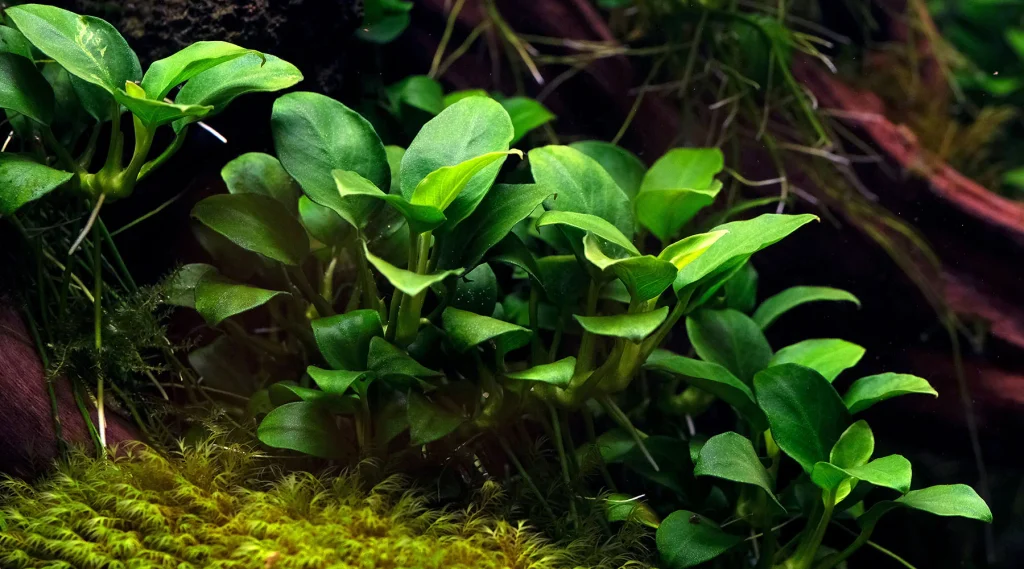
Anubia Nana is probably the most recommended variety for beginners, and for a good reason. It is the compact version of the Anubias family, with smaller, rounder leaves than other, larger varieties, making it perfect for the foreground or for smaller aquariums, without taking up too much space. It has thick, dark green, sturdy leaves that withstand a variety of conditions and even occasional neglect without wilting or rotting easily. It grows slowly, which means less pruning and maintenance, and it adapts well to both small aquariums and larger setups.
An important detail about this plant: the rhizome, that thick part from which the leaves and roots emerge, should never be buried in the substrate, as this usually leads to rot. Ideally, attach it to rocks or wood using fishing line or a good gel glue, leaving the rhizome exposed to the water. It tolerates low to moderate light without any problems, and it’s one of the hardest plants to kill, even for those who are still learning the basics.
2. Java Fern
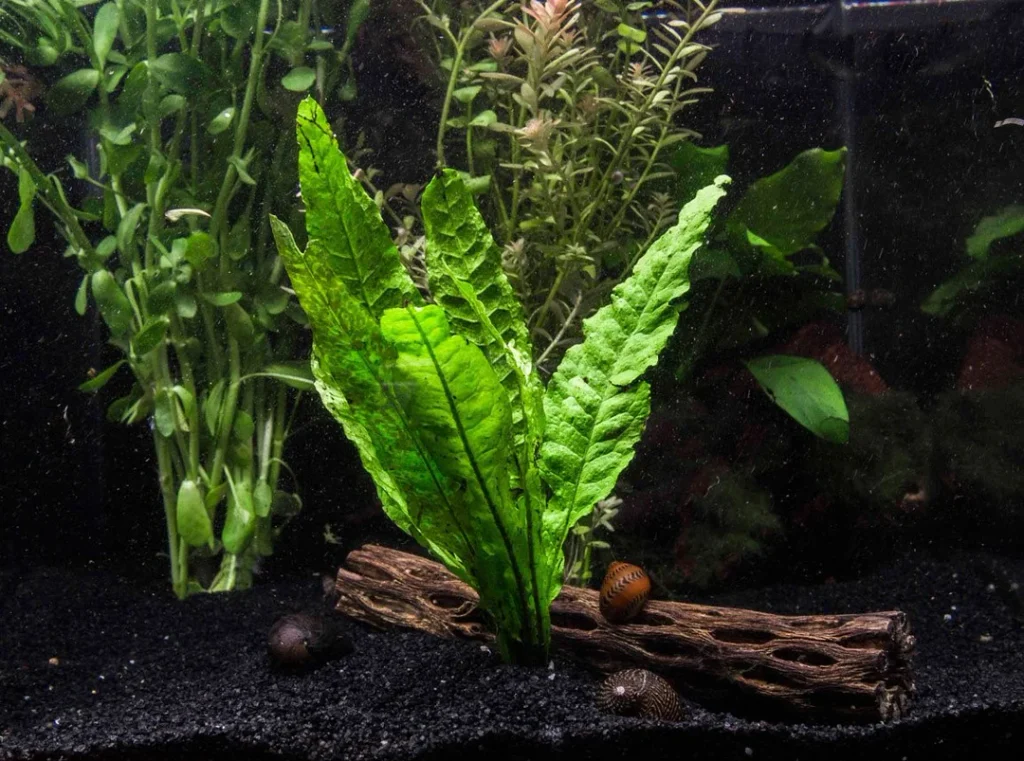
Java Fern is another classic choice for those who want greenery in their tank without much effort. It has long, wavy leaves with a slightly rough texture that sets it apart from other, smoother plants, and it grows attached to rocks or wood, like Anubias, rather than taking root directly in the substrate.
It is extremely tolerant of different water and light conditions, and one of its most interesting features is its ability to produce small new plants directly at the tips of its older leaves, which you can then detach and use to expand your tank or even share with other aquarists. It tolerates low to moderate light and grows at a slow to moderate rate, making it a plant that requires low maintenance over time.
3. Christmas Moss
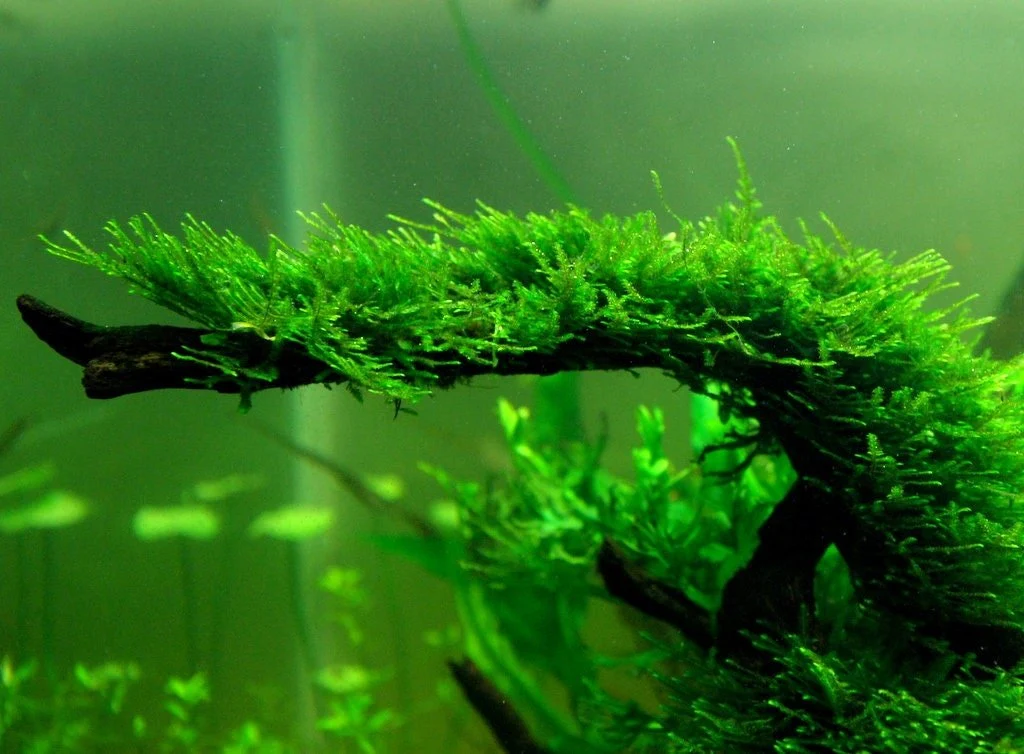
Christmas Moss is a variety of aquatic moss with a more organized and symmetrical structure than traditional Java moss, with branches that resemble small Christmas tree branches. In addition to its more elegant appearance, it offers exactly the same versatility that has made aquatic mosses so popular among aquarists. You can attach it to rocks and wood to create a natural, dense effect, or let it serve as a hiding place and breeding ground for shrimp, that love the tangled structure this moss creates.
It grows in virtually any light condition, although it grows faster and develops a more compact, defined shape in moderate light rather than low light. It has no special substrate requirements, since it doesn’t root in the traditional sense, and it propagates easily. Simply divide a piece and attach it to another spot to start a new colony. It’s worth pruning it from time to time to maintain the neater shape that sets it apart from common Java moss.
4. Cryptocoryne
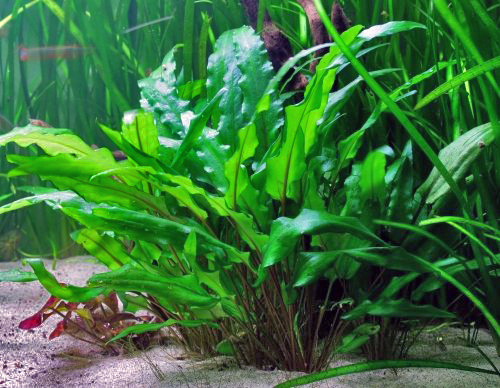
Cryptocorynes are plants that take root in the substrate, with leaves that vary greatly in shape and color depending on the species, ranging from traditional green to shades of bronze and red. They are known for their long-term hardiness, although they have a particular behavior you should be aware of before purchasing them: they can suffer from a problem where the leaves suddenly fall apart after being transplanted or following a sudden change in water parameters. The good news is that this is rarely fatal. The plant usually recovers within a few weeks, producing new leaves that are already adapted to the new environment, as long as the roots remain healthy.
Once established, Cryptocorynes are extremely hardy and low-maintenance, tolerating low to moderate light without any problems, and a nutrient-rich substrate greatly aids long-term growth, although it is not strictly necessary.
5. Limnophila Sessiliflora
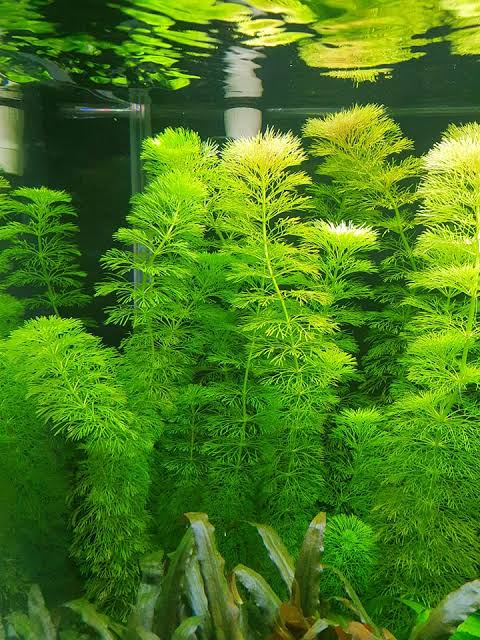
Rounding out the list is Limnophila sessiliflora, a stem plant with thin, finely divided leaves, that create a dense, light-green visual effect that’s quite attractive in any tank. Unlike the other plants on this list, which grow slowly and require little maintenance, Limnophila grows at a much faster rate, which means more regular pruning but also visible results much sooner for those who enjoy seeing progress.
Even without CO2, this plant can grow healthily, although it clearly benefits from more light than the other species on this list to maintain a compact shape and prevent the stem from becoming too spaced out between leaves. It takes root in the substrate, and propagation is simple: just cut a piece of the stem and replant it, since it roots easily from any segment. It’s a great option for anyone who wants to try stem plants before moving on to more demanding species that require serious CO2.
#Bonus Plant: Bucephalandra
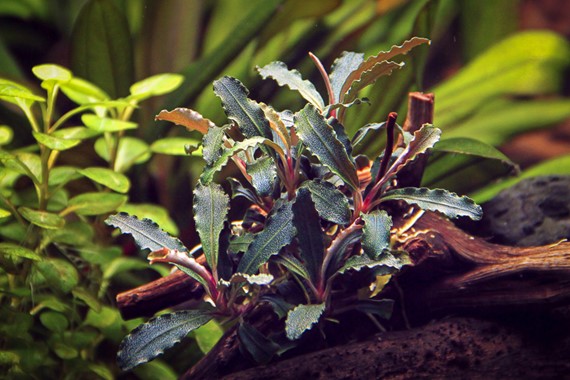
And since you’ve made it this far, here’s a bonus for those who enjoy a different kind of challenge. Bucephalandra is one of the most beautiful plants you’ll find in the hobby, with stiff, textured leaves in shades ranging from dark green to metallic blue depending on the species and lighting, and tiny flowers that sometimes appear even underwater. Like Anubias nana, it attaches to rocks and wood, never burying its rhizome, and tolerates low to moderate light well without any need for CO2.
Now, a word of warning: this plant grows slowly, really, really slowly. So much, that sometimes it will take months just to see a new leaf unfurl. It’s not a plant for anyone looking for quick results. It’s literally a lesson in patience with roots, even slower than the Anubia Nana already mentioned on this list. But for those who don’t mind waiting, the result is one of the most elegant and unique looks you can achieve in a low-tech aquarium, and it’s well worth the wait for anyone who enjoys a long-term project.
Quick Comparison
| Plant | Attachment Type | Light Level | Growth Rate |
| Anubia Nana | Attached to rock/wood | Low to Moderate | Slow |
| Java Fern | Attached to rock/wood | Low to Moderate | Slow to Moderate |
| Christmas Moss | Attached to wood | Low to Moderate | Moderate |
| Cryptocoryne | Roots in the substrate | Low to Moderate | Slow to Moderate |
| Limnophila Sessiliflora | Roots in the substrate | Moderate | Fast |
| Bucephalandra | Attached to rock/wood | Low to Moderate | Very Slow |
Frequently Asked Questions
Do these plants grow really well without any fertilizer?
They do, although a basic liquid fertilizer or a fertile substrate mix helps maintain more vibrant colors and more consistent growth over time. It’s not required, but it’s a little extra that’s worth it.
Can I combine all these plants in the same tank?
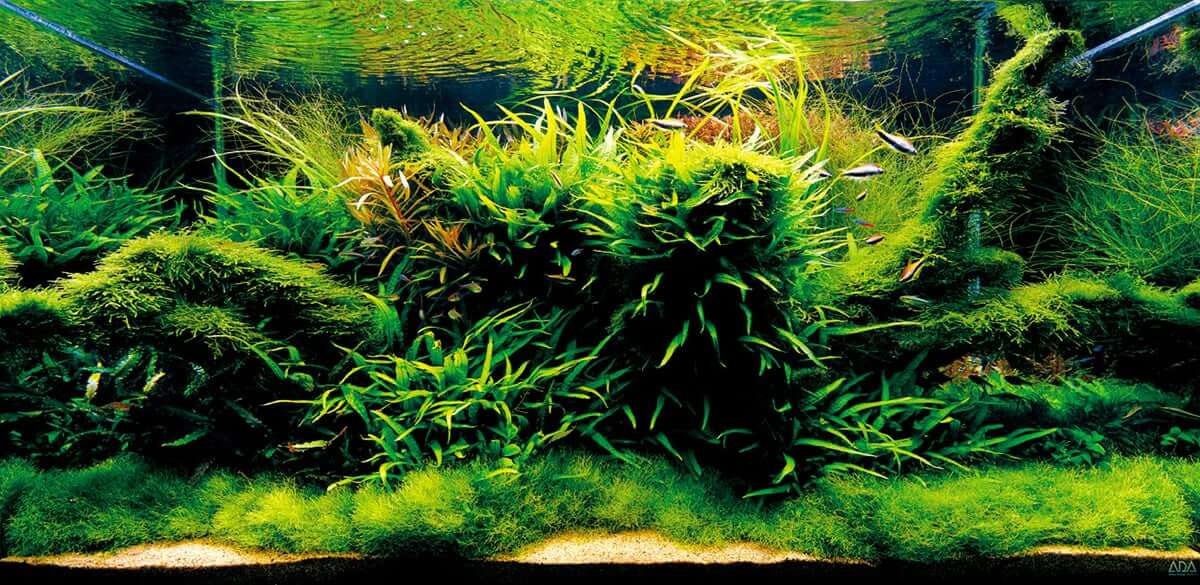
No problem at all, and it’s actually a very common combination among beginner aquarists. Anubias and Java Fern work well in the foreground, attached to rocks or wood. Cryptocorynes fill the middle ground. Christmas Moss covers surfaces and creates hiding spots and Limnophila sessiliflora adds height and density to the back of the tank.
Will I have algae problems even without CO2 and with low light?
The risk is much lower than in a setup with strong light and insufficient CO2, precisely because these plants are balanced with the recommended amount of light. If you maintain a regular water change routine and avoid over-fertilizing, the risk of algae remains under control.
In short, you don’t need CO2 or a lot of technical experience to have a beautiful, healthy planted aquarium. These five species prove that you can have plenty of greenery in your aquarium with a simple, hassle-free routine. That’s perfect for anyone taking their first steps in aquascaping.
If, after reading this article, you feel that your tank needs a liquid fertilizer to keep your low-tech plants vibrant and rich in color, here are the two best options:
| Premium Option: Tropica Premium Nutrition | Budget-Friendly Option: Tetra PlantaMin |
| Widely considered one of the absolute best fertilizers on the market, ideal for achieving maximum leaf quality without encouraging algae growth. | A reliable, highly accessible universal fertilizer that gets the job done perfectly without breaking the bank. |