What Is the Nitrogen Cycle? The Most Important Step Before Adding Fish
If there’s one concept that separates those who will succeed in the hobby from those who will face a series of costly disappointments, it’s the nitrogen cycle. It might sound complicated, but I promise it’s simpler than it seems. To grasp the basics, you just need to understand one simple idea: your tank is a living ecosystem, full of invisible bacteria that work day and night to keep your fish alive, and those bacteria need time to establish themselves before any fish are introduced.
What exactly is the Nitrogen Cycle?
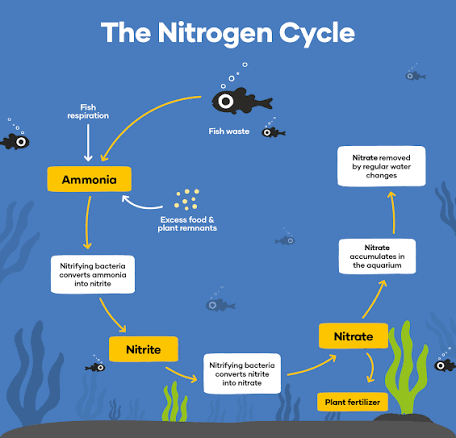
All organic material inside a tank like food scraps, fish waste and dead leaves decomposes and releases ammonia. And ammonia is really bad news. To put it bluntly: it’s highly toxic to fish, even at low concentrations. In a tank without established bacteria, this ammonia builds up unchecked, and this is where most beginner mishaps occur.
Fortunately, nature has come up with an ingenious solution. There are bacteria that settle in the substrate, the decorations, and especially the filter media, and that feed on ammonia, converting it into nitrite. The problem is that nitrite is also toxic to fish, although in a different way than ammonia. Luckily, there is a second group of bacteria that specializes in converting nitrite into nitrate, a much less dangerous compound that fish can tolerate in moderate concentrations and that you can then remove through regular partial water changes.
This entire process, from ammonia turning into nitrite, and nitrite turning into nitrate, is what we call the nitrogen cycle. And most importantly, these bacteria don’t appear in a matter of seconds. It takes several weeks for them to establish themselves in sufficient numbers to do the job.
Why is this so important before you put in the first fish?
Imagine you buy a new aquarium, fill it with water, turn on the filter, and the next day after that, you go to the store to pick up your first fish. It seems logical, but it’s probably the most common and most damaging mistake among beginners. At that point, your aquarium doesn’t yet have enough bacteria to process the ammonia that the fish will produce just by breathing and eating. The result is commonly known as “new tank syndrome”: ammonia and nitrite levels skyrocket in the first few days, the fish become visibly stressed, and unfortunately, many of them don’t survive.
Cycling a tank before adding fish gives these bacterial colonies time to grow and establish themselves in sufficient numbers, so that when the first fish arrive, the system is already able to handle the ammonia they will naturally produce. It’s basically like building a house before moving your whole family into it.
How to Cycle an Aquarium in Practice
There are two main approaches, and each has its own audience.
The fishless method, known as “fishless cycling,” is now considered the most responsible and most recommended. It involves adding a source of pure ammonia to an empty tank and testing the water regularly to monitor the process. In the first few weeks, you’ll see the ammonia levels rise and then fall as the bacteria that process it become established. Then nitrite begins to appear and its levels also rise and then fall as the second group of bacteria kicks in. When you’re able to add a dose of ammonia and see that, within 24 hours, both the ammonia and nitrite levels drop to zero, you’ll know that your tank is cycled and ready to house fish.
The “fish method,” which is older and less recommended today, involves placing a few very hardy fish in the tank right away and letting the cycle develop on its own with them inside, with frequent water changes to control ammonia and nitrite spikes along the way. It works, but it subjects the fish to avoidable stress, which is why most experienced aquarists clearly prefer the fishless method whenever possible.
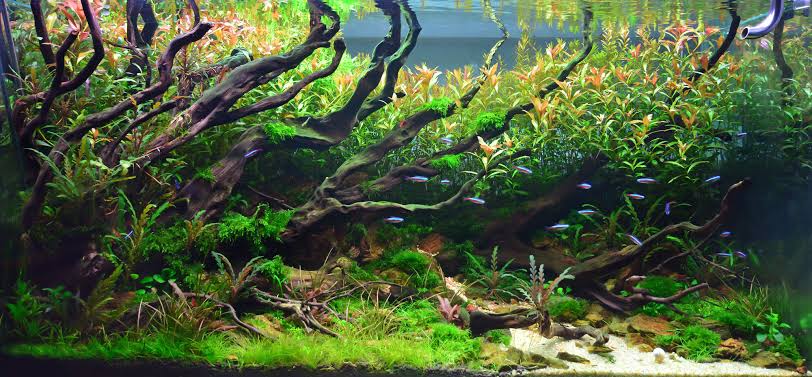
There is also a simpler method that is quite popular among those who prefer a less technical approach: place the substrate, the wood, and rocks in the tank on the first day, fill the tank with water, and let the system rest for about a month. Over time, the organic matter in the wood and substrate naturally releases small amounts of ammonia, which kickstarts the process and allows the bacteria to gradually establish themselves, without you needing to add anything else. Even without fish or an additional source of ammonia, it’s worth doing a partial water change halfway through this period. Once a week is usually enough, just to keep the water clean and prevent an excessive buildup of debris while the bacteria work in the background. A tip that’s worth its weight in gold for anyone following this path: when the month is over, the natural temptation is to put everything in at once: plants and fish together. But the best approach is to give the plants a head start by adding them around the third week, and only introduce the fish in the fifth or sixth week. This way, the plants have time to take root and start competing with the algae for nutrients before the fish arrive and disrupt the system’s balance.
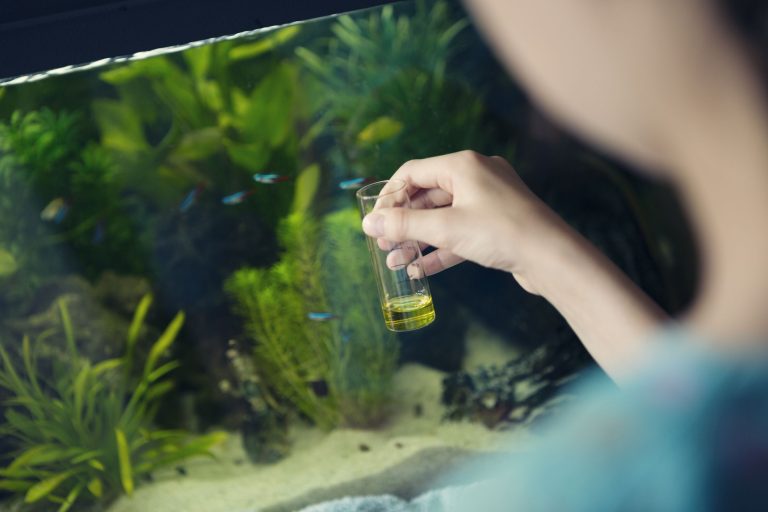
No matter which path you choose, a good-quality water testing kit is practically indispensable throughout this entire process. Without testing the water, you risk losing your animals sooner than you might think.
How long does the process take?
In conclusion, we can say that, on average, cycling a tank from scratch takes between 4 and 6 weeks, although this can vary slightly. At first, it can be discouraging to have to wait more than a month before adding “real life” to the tank, but it’s always worth the wait!
Frequently Asked Questions
Can I just buy a product that “introduces bacteria” instantly?
There are commercial products that help speed up the process, and some work reasonably well, but none of them can completely replace the time it takes for bacterial colonies to become well-established. Treat them as a boost, not as a magic, instant solution.
What happens if I add fish before the cycle is complete?
To make a long story short, you would essentially be exposing the fish to toxic ammonia and nitrite, which causes severe stress and, in many cases, the death of some or all of the fish within the first few weeks.
Do I need to cycle the tank again after a thorough cleaning?
If you rinse the filter media in tap water or replace it entirely, yes, you run the risk of eliminating a large portion of the beneficial bacteria and having to wait all over again. Therefore, always rinse the filter media in water taken from the tank itself, never in chlorinated tap water.
After all, the nitrogen cycle isn’t just some technical detail you can ignore. It’s literally the foundation on which the rest of your tank rests. Invest these first few weeks with patience, and the rest of the journey will be much smoother.