If you’re about to set up your first tank, I’m sure a classic question has already crossed your mind: freshwater or saltwater? That’s a good question, because the answer changes everything that comes next. It changes how much money you’ll spend, how much time you’ll spend on your knees next to the tank, and how much patience you’ll need when things don’t go quite as planned. And things won’t go quite as planned at some point. That’s a given for all aquarists, whether beginners or veterans. The good news is that making the right choice from the start saves you a lot of headaches later on.
What is a freshwater tank?
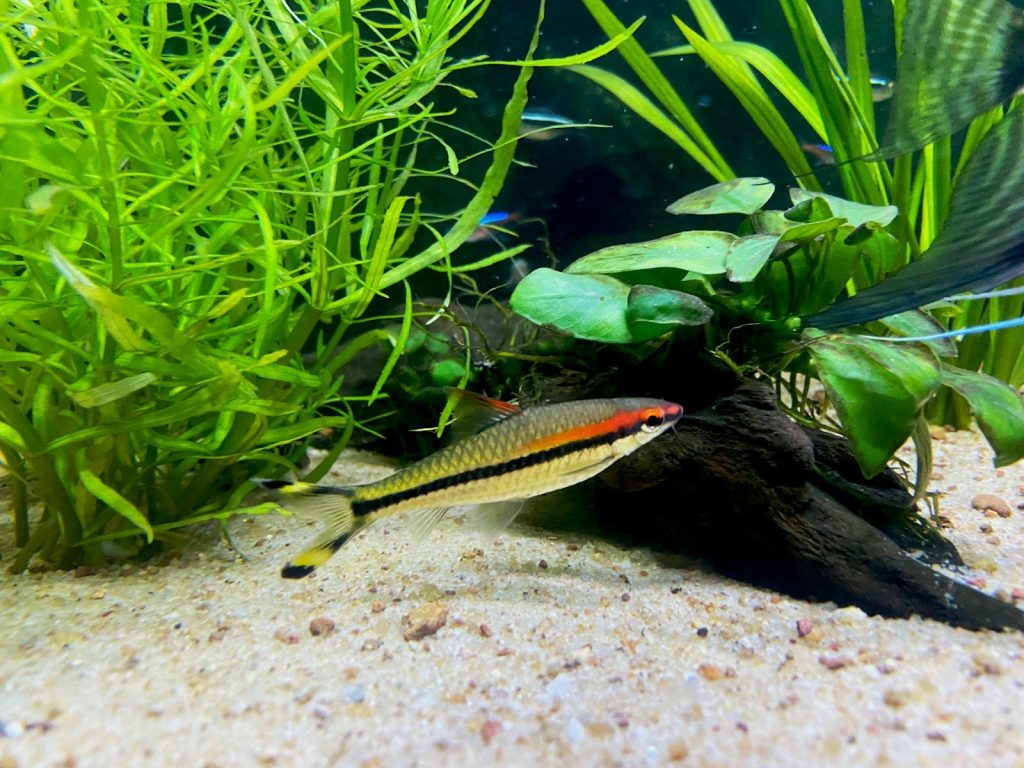
Let’s start from the beginning: a freshwater tank recreates rivers, lakes, and wetlands, literally the natural habitat of fish such as guppies, bettas, tetras, and many others. It’s the most common gateway into the world of tank keeping, and it’s no coincidence that so many people start here. You don’t need protein skimmers, refractometers, or reverse osmosis systems just to get started. A simple starter kit, including a tank, filter, heater, and substrate, can give you a solid foundation to get off on the right foot, without spending a fortune in the first week.
Water parameters are also more forgiving in freshwater, which is a blessing for those who are still learning. A missed water change until the following week, or slightly overfeeding, will rarely kill a guppy or a platy. If you like plants, even better: species like Anubias, Limnophila sessiliflora, and Bucephalandra Black Pearl thrive even in the care of a distracted beginner, which opens the door to a beautiful planted aquarium right from the start, without needing years of experience.
This doesn’t mean that freshwater is synonymous with total ease. You must be careful with that idea. Some species of fish and plants require much more specific care than average, and they can catch you off guard if you think freshwater is always easy. And there’s one step that’s mandatory, rain or shine: the aquarium must be cycled. Many beginners try to skip this step, and almost always pay dearly for it a few weeks later, with sick or even dead fish.
What is a saltwater tank?
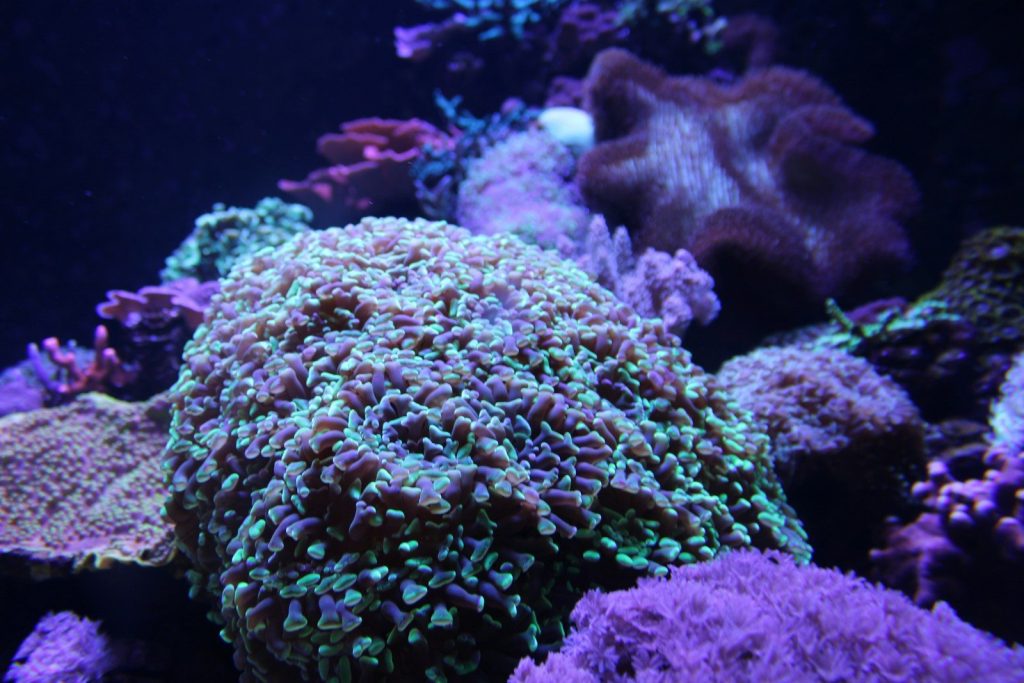
On the other hand, we have saltwater, and here things take on a whole new look. A marine aquarium, with clownfish, colorful damselfish, and live corals, is a visual spectacle that freshwater simply can’t replicate. Colors, textures, and behaviors that look like they’re straight out of a documentary on coral reefs—right in your living room. The problem is that all this beauty comes with a much higher price tag.
To put it bluntly, the equipment is expensive, and you need to be prepared for that. You’ll need specialized lighting for corals, powerful circulation pumps, and quite often a protein skimmer to keep the water clean to the standard that corals require. Water parameters also become much more sensitive, and even a slight variation in salinity, temperature, or calcium can be disastrous for a coral that cost a small fortune.
The animals themselves are also more expensive, and they arrive in a more fragile state after being transported, which means that the margin for error is much tighter for beginners. To sum up the main point: mistakes that would be nothing more than a “brief scare” in freshwater can, in saltwater, cost you an entire coral or even cause the whole system to collapse.
Direct Comparison
Aspects
Freshwater
Saltwater
Initial cost
Low to moderate
Moderate to high
Maintenance
Simple
Demanding
Error tolerance
High
Low
Cost of animals
Low to moderate
Moderate to high
Learning curve
Gentle
Steep
Ideal for
Beginners
Experienced aquarists
So, which one should you choose?
If this is your first aquarium, the sensible choice is freshwater, there’s really no question about it. Not because it’s “less” than saltwater (far from it), but because it gives you room to make mistakes without any drama. You’ll take your time learning about aquascaping, managing water quality week by week, and choosing species that get along well with each other. All of this without running the risk of losing an extremely expensive fish or coral because of a typical beginner’s mistake.
After a few months with a stable, lively freshwater aquarium, without any major setbacks along the way, you’ll have a solid foundation to move on to saltwater, if that’s still what you want. This is exactly the path that most experienced marine aquarists recommend to anyone who asks about this topic.
Frequently Asked Questions
Can I have both types of aquariums at the same time?
Yes, you can, without any technical issues. They are completely independent systems, and the only real cost is your time and your budget divided between the two.
Is saltwater always more expensive in the long run?
In the vast majority of cases, yes. The sea salt you need to buy regularly, supplements like calcium and magnesium, and the specialized equipment that wears out over time take a much bigger toll on your wallet over the months and years.
Can a freshwater aquarium be just as beautiful as a saltwater one?
Without a doubt. A well-designed aquascape with plants like Rotala, Bucephalandra, or Christmas Moss, rivals many saltwater aquariums in beauty. On top of that, you can be sure that it costs a fraction of the price and causes far fewer headaches.
To sum it all up in one sentence: start with freshwater, build your confidence gradually, and save saltwater for the day when you really know what you’re doing.
0 Comments